The Crops Are Not Disappearing. They Are Going Home.
Cacao, coffee & vanilla - from the people who grow them
By Estefanía Simon-Sasyk, Jennibeth Paglinawan, Gardua Dennis, Juan Echevarría and Arturo Elías García
Mycelium Gastronomy Network · Field Intelligence Series · 2026
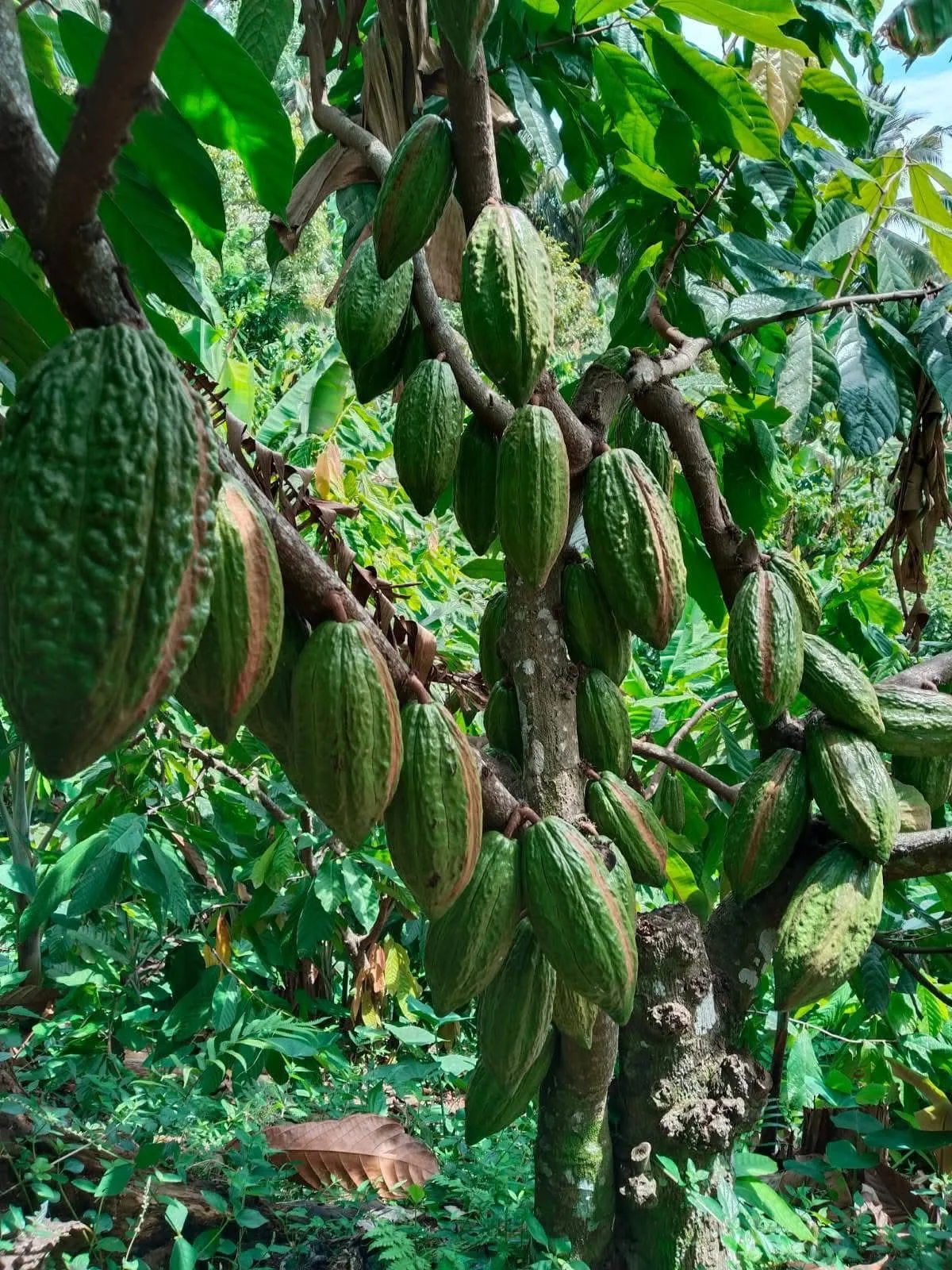
Photo credit: @Westafricanfarmersinitiative
I. The View From the Table
Over three posts, we wrote about cacao, coffee and vanilla as supply problems. Cocoa broke $10,000 a tonne for the first time ever in 2024, peaking near $12,900 that December before correcting sharply through 2025.¹ Half the land currently suitable for Arabica coffee is projected to become unsuitable by 2050.² Vanilla runs roughly 80% on a single island.³ We framed each one the way a food company would: concentration, volatility, climate stress, the case for building product optionality before the next price spike.
That framing is correct. It is also partial. It is the view from the table — from the buyer, the brand, the R&D bench. It treats the crop as an input that is becoming unpredictable.
So we went to the other end of the chain and asked the people who actually grow these crops what they see. The answer is not the same story told with more feeling. It is a different story.
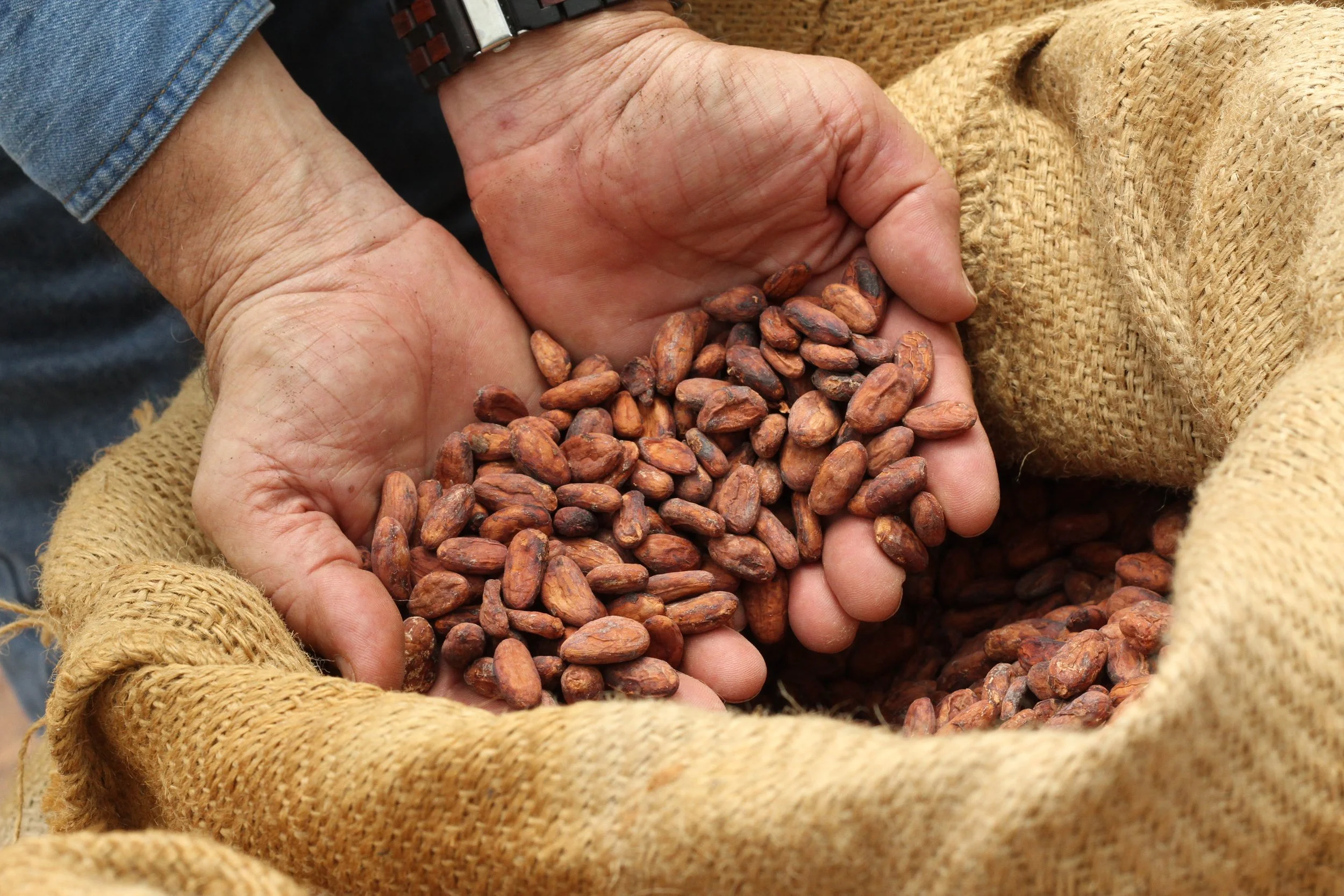
Photo credit: Jeanmarie Chocolates
II. The view from the Farm
From origin, scarcity does not read as scarcity. It reads as two things at once.
The first is relocation. None of the producers we spoke with described a dying industry. Each described one that is moving — back toward the land, into fewer hands, away from the commodity logic that has governed it for a century.
The second is the thread we keep returning to at MGN: territory, product and health. What you grow, where you grow it, and what it does to the body that eats it are not separate questions. The commodity system treats them as separate. The custodians do not. And it is on that thread — not on price — that the future value of these crops is being built.
Hold both in mind. They are the same story from two angles.
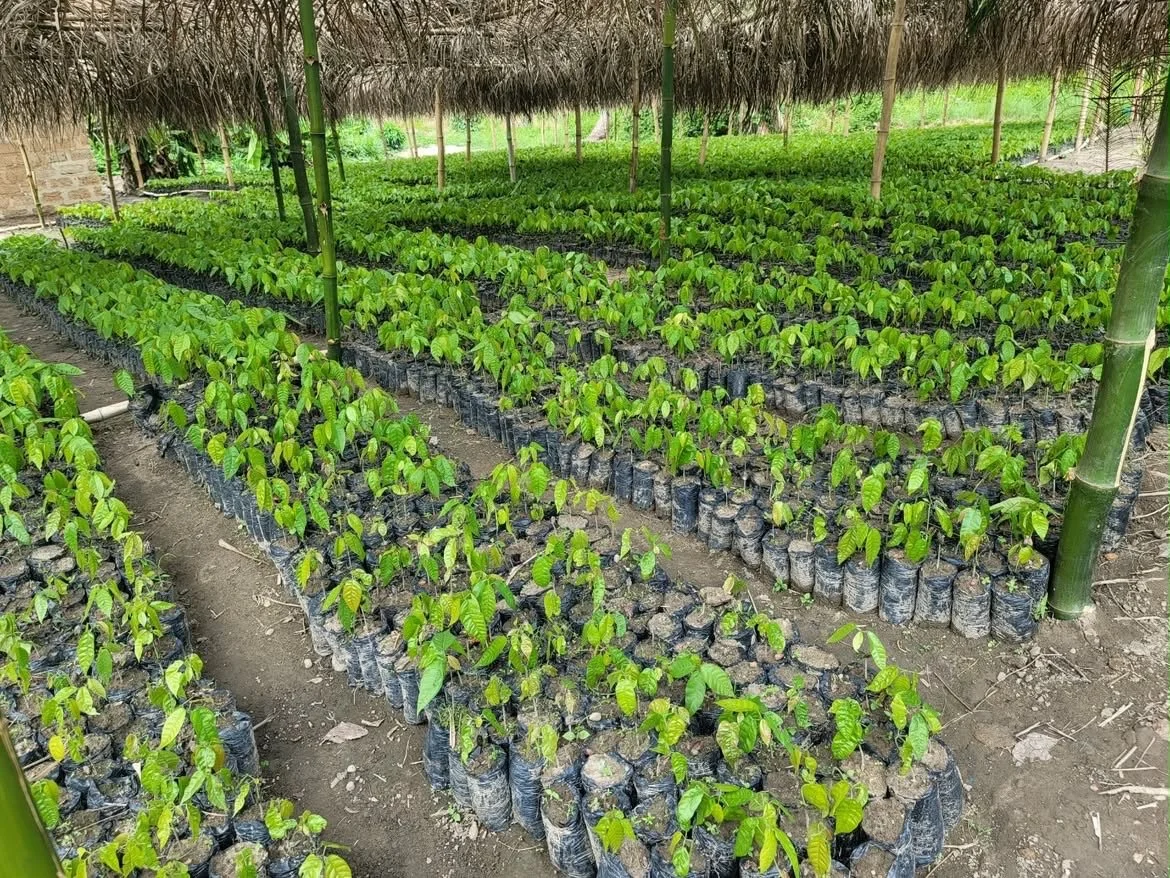
III. Liberia: The Value Comes Home
Gardua Dennis is third-generation. His grandfather farmed cocoa and coffee; his family scattered to cities when the grandfather died, as farming families do everywhere. Dennis went further — into an investment firm in New York trading cocoa and cacao on the futures market, where he watched it clear tens of millions in a year on cocoa.
FIELD NOTE — LIBERIA
“ They have yet to touch a pod. They have yet to be on a farm. But these guys will make more than the cocoa farmers in their lifetime, a couple of times over.”
So he went back to planting. The West African Farmers Initiative now links growers across Liberia, Cameroon and Côte d'Ivoire, taking the lion's share of the value rather than handing it to brokers.
His reading of the future is the most counter-intuitive thing we heard. He is not afraid for the plants. Biology, he argues, adapts faster than we can perceive. The record offers him some support: Coffea stenophylla — a heat-tolerant West African species lost from cultivation for over fifty years — was relocated in the wild in Sierra Leone in 2018 and is now being trialled as a climate-resilient crop.⁴ The fragile thing, in his telling, is not the crop. It is the trading architecture built on top of it.
And that architecture, he says, is folding back toward origin. The EU's deforestation regulation — whose timeline has shifted but whose direction is set — raises the compliance burden on raw commodities entering Europe.⁵ Import duties fall harder on raw commodities than on finished goods. The cost of operating in consuming countries — rent, wages, regulation — keeps rising. Put those together and the logic inverts: it no longer makes sense to grow in Africa, manufacture in Switzerland, and sell back. It makes sense to manufacture at origin and pay the tariff. Dennis has watched regulating agencies in West Africa relax rules so domestic companies can do what the European trading houses once did.
FIELD NOTE — LIBERIA
“In order to sustain, it’s going to need to go back home”
The people genuinely exposed in this picture are not the farmers. They will still have their cacao, their vegetables, their fruit; they will be fed. The exposure sits with the trading communities in the consuming countries — the people who, as Dennis put it, never see the bean.
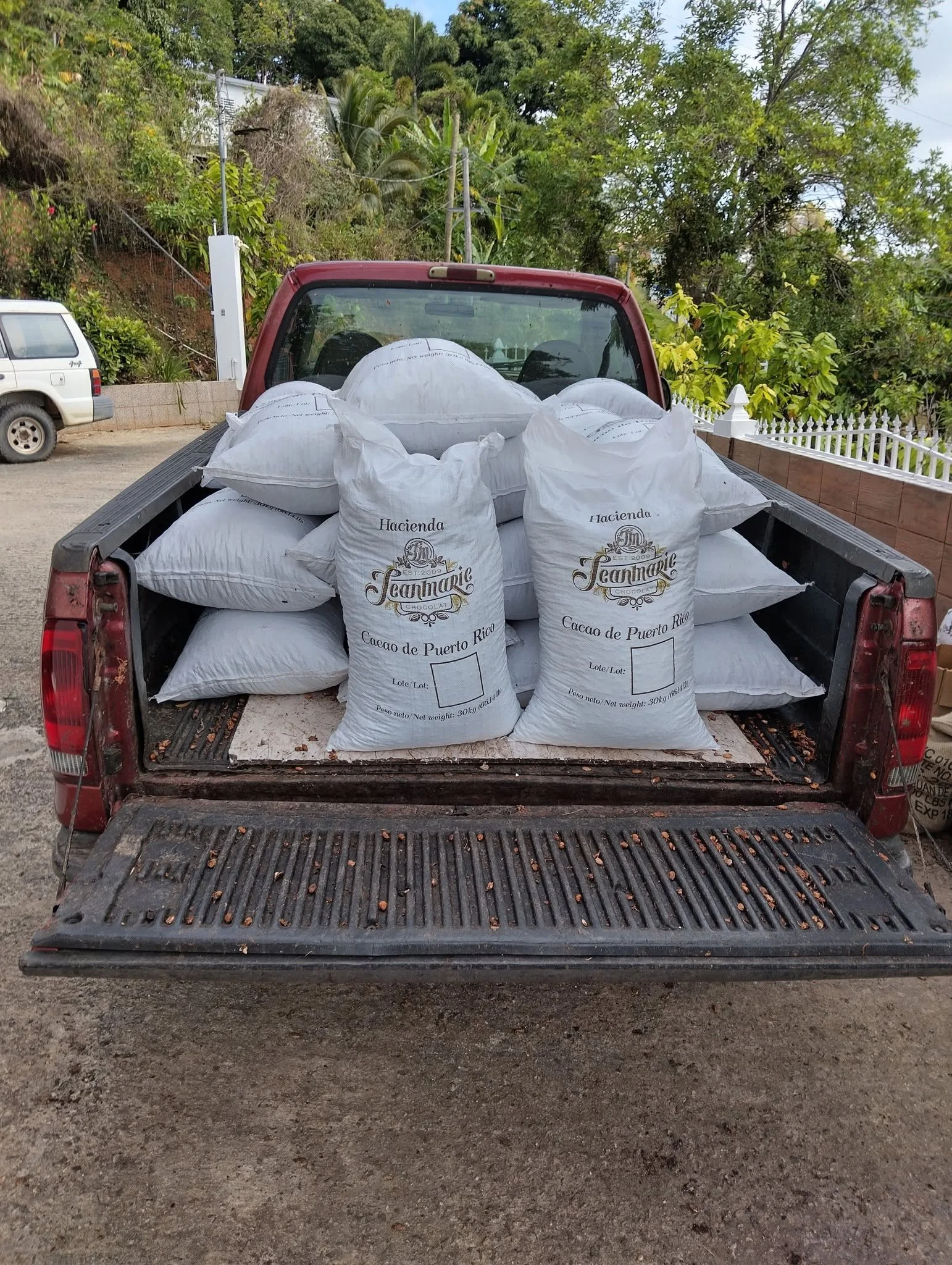
Photo credit: Jeanmarie Chocolate
IV. Puerto Rico: The Last Local Bean
Puerto Rico abandoned cacao for more than a century. Cacao was introduced by Spanish colonists, but by the 1800s most farms had switched to more lucrative crops and the industry slowly disappeared. Juan Echevarría began replanting from 2008, rebuilding an industry from almost nothing through Hacienda Jeanmarie, alongside Francis Murchison, the Canadian chocolatier with whom he later founded Jeanmarie Chocolat.⁶ In late 2024 his operation exported the first container of Puerto Rican cocoa — seven tonnes, to Colorado — in roughly a hundred years.⁷
What they are growing is not a commodity. It is cacao fino de aroma — the category that does not move on Wall Street or any exchange, sold instead to a selective group of chocolate makers who want transparency about exactly what they are buying. In 2026, Puerto Rico won gold for the first time at the international Cacao of Excellence awards — the prestigious global cacao-quality programme — along with a bronze, placing among the world's Best 50.
FIELD NOTE — PUERTO RICO
“In speculative finance, people never even see the bean. They don’t know what it is.”
His macro read is hard-edged. Cacao is dominated by Ghana, Nigeria and Côte d'Ivoire — and that production is under strain. In Ghana, illegal gold mining known as galamsey is destroying cocoa farms, with farmers selling or being driven off poisoned land; more than 100,000 acres of cocoa farms are estimated to have been lost to it.⁸ Echevarría expects production to contract further. At today's prices, he argues, many growers will simply quit because it is no longer profitable, which will manufacture the next shortage. His projection: by 2030, cacao is a luxury article.
Underneath that sits a quieter structural shift across the Americas, and the data bears it out. Ecuador grinds less than 10% of its crop at home, Brazil has become the only major cocoa producer that is now a net importer, and Mexico imports far more cocoa than it produces.⁹ Value is being captured closer to where the crop is grown — the same movement Dennis described in West Africa, arriving from a different direction.
For Puerto Rico, the strategy is precisely not to compete on volume. Being a US territory, its beans are exempt from the import tariffs and fumigation that other origins face, which lets them compete despite a high cost base. Echevarría sells at a steep premium to a small circle of makers. The bet is on a consumer who is becoming more selective, who reads "real" and "natural" as the reason to buy — set against the coming wave of synthetic chocolate.
FIELD NOTE — PUERTO RICO
“You eat what you are. That’s the bet — that it stays natural, and that’s why you buy it.”
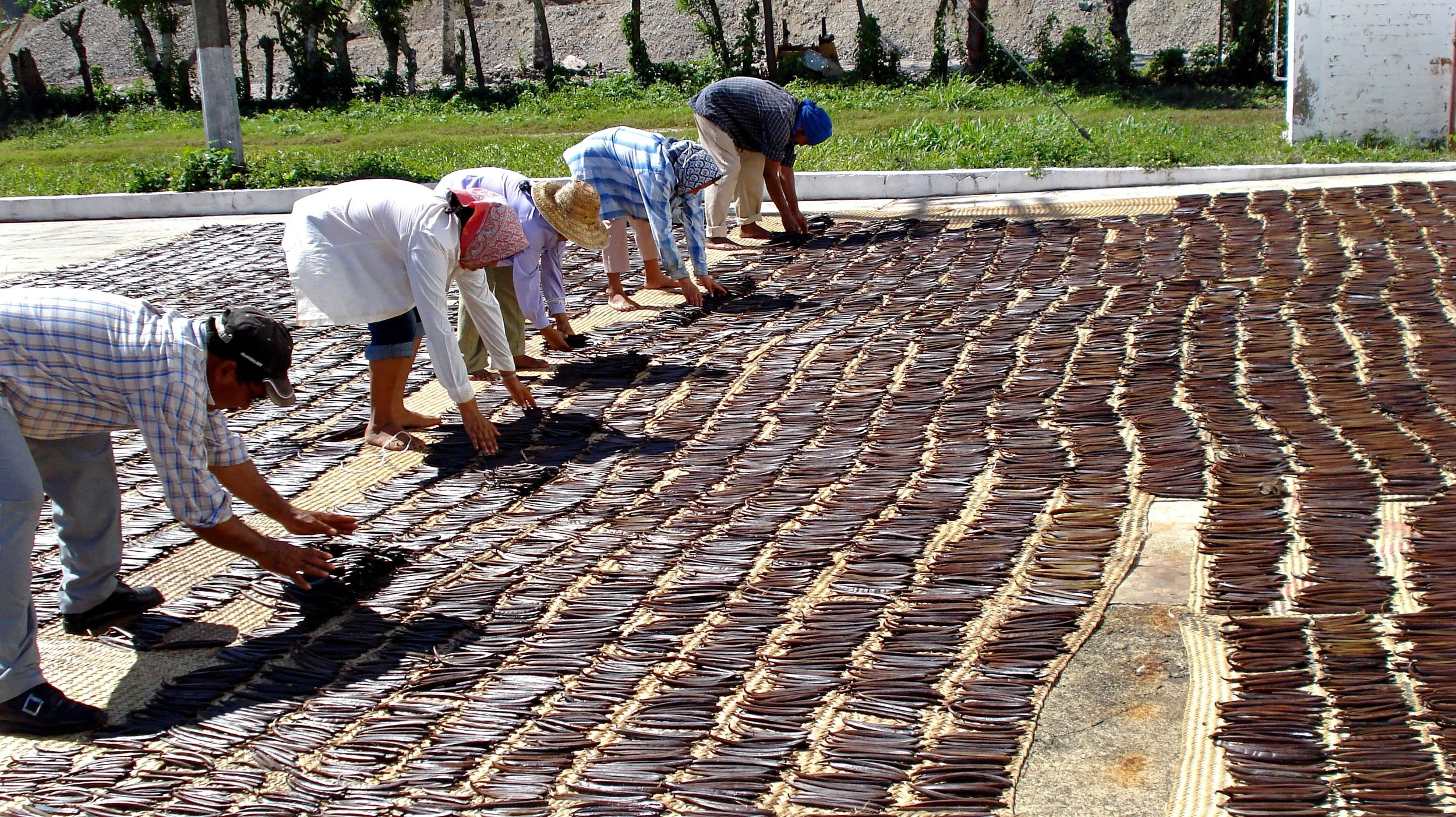
Photo credit: Akih Vanilla
V. The Chinantla: Building a Bank for the Flower
Arturo Elías García grows vanilla where vanilla comes from. The Chinantla, a micro-region of Oaxaca, holds the greatest genetic diversity of the species — seven wild varieties — and is the only place in the world where vanilla still grows in the wild without human intervention.¹⁰ The Chinantec name carries the whole biology inside it: KUO LI GM - kuo for pod, li for flower, gm for the vine. The natural pollinator is the colibrí (hummingbird) — akih in Chinantec — which is where Akih Vanilla, the project he co-founded, takes its name. Long before it was "vanilla," the Chinantecs supplied it as tribute to Moctezuma.
That deep lineage is now one generation from breaking. Modern cultivation here only restarted in 1985, after the crop had all but vanished; the recovery came through a language-and-culture conservation effort, on the principle that when a species disappears, a word disappears with it. Today the group is around [14 families]. Most of the vainilleros are in their seventies and eighties; some can no longer see or hear well enough to pollinate. The young have migrated, because vanilla takes four years to yield and the young need money now.
FIELD NOTE — OAXACA
“We are one generation away from there being very few vanilla producers, or none.”
Last year, the entire region produced around 40 kilos of green vanilla. His response is to build what does not yet exist: a plantación madre — a conservation mother-garden of half a hectare in the valley of San Felipe Usila — to protect the original genetics and, just as importantly, the knowledge that travels with them. It is being funded now, in public, through a crowdfunding campaign, because the institutions that should protect a crop's center of origin are not the ones stepping in. Arturo no longer calls himself a producer. He calls himself an educator, an activist for the crop.
The fork he names is the same one Puerto Rico named, from the vanilla side. Vanillin, synthesised by Tiemann and Haarmann in 1874, was the world's first synthetic flavour; its low cost and accessibility have made it the default for most food manufacturers ever since.¹¹ He estimates fewer than 5% of people have ever tasted real vanilla — and a vanishingly small fraction, Chinantec vanilla, at roughly €145 per 100 grams.
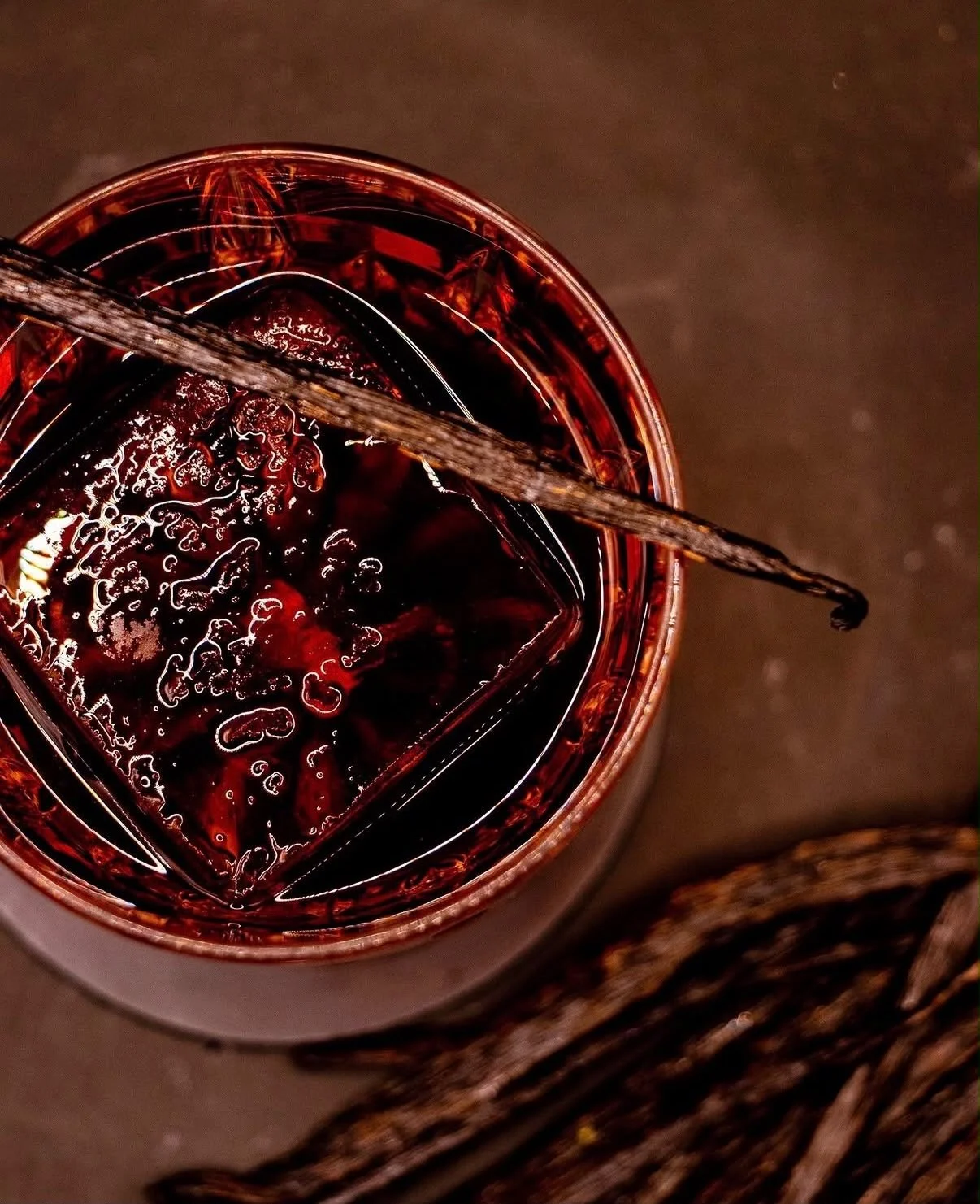
His most radical move runs against everything the export model assumes. For years the market was Europe. Now he sells, at origin, to Oaxaca — placing the vanilla in the kitchens, bars and dessert menus of the city it came from, so that the waiter telling you a cocktail is made with the vanilla once destined for Moctezuma becomes part of how the crop survives.
FIELD NOTE — OAXACA
“ Selling my vanilla here — that, to me, is the most punk thing there is.”
Arturo's campaign to build the conservation mother-garden is live:Dona y Salvemos la Vainilla Endémica de la Chinantla.
VI. What the Custodians Know
Three expert producers. Three regions. Three crops. The same structure, arrived at independently.
The first thing they know is that the plants are not the fragile part. Cacao, coffee and vanilla have survived war, disease and abandonment; they re-emerge, adapt, throw up new varieties. What is fragile is the system layered on top — the trading houses, the speculative markets, the logic of growing in one place and capturing value in another.
The second thing they know is that the value is moving home. Regulation, tariffs and cost are pushing manufacturing back toward origin, and producing countries are capturing more of the chain. The North experiences this as supply risk. Origin experiences it as the long-delayed return of value to the land.
The third thing they know is that each of these crops is splitting in two. On one side, a synthetic, commoditised version — cheaper, scalable, made for a mass market that has largely never tasted the real thing. On the other, a real, place-bound version that becomes rarer, more expensive, and more tightly held by the territories and people who carry its genetics and its knowledge. Puerto Rico is betting the whole project on which side the selective consumer chooses. Oaxaca is raising the money to make sure the real side still exists to choose.
This is not only the view from the farm. A market-development consultant working across African and Caribbean value chains described the same split from inside the trade: industrial substitution cutting the cacao percentage in mass-market products, sold as "chocolate flavoring," while a smaller, more knowledgeable niche holds and deepens.
FIELD NOTE — TRADE SIDE
“They keep reducing the cacao percentage and selling it as ‘chocolate flavoring’ — the nominal substitution of what chocolate even is. The niche is the one that bets on quality: there’s education, there’s passion, there’s technical knowledge.”
All these experts in different vantage points, naming one structure. This is the foresight that does not come from the procurement desk, the futures screen, or the sustainability report. It comes from the custodians. Which raises the question every food business should be asking: if this is where the crops are going, what do you do about it?
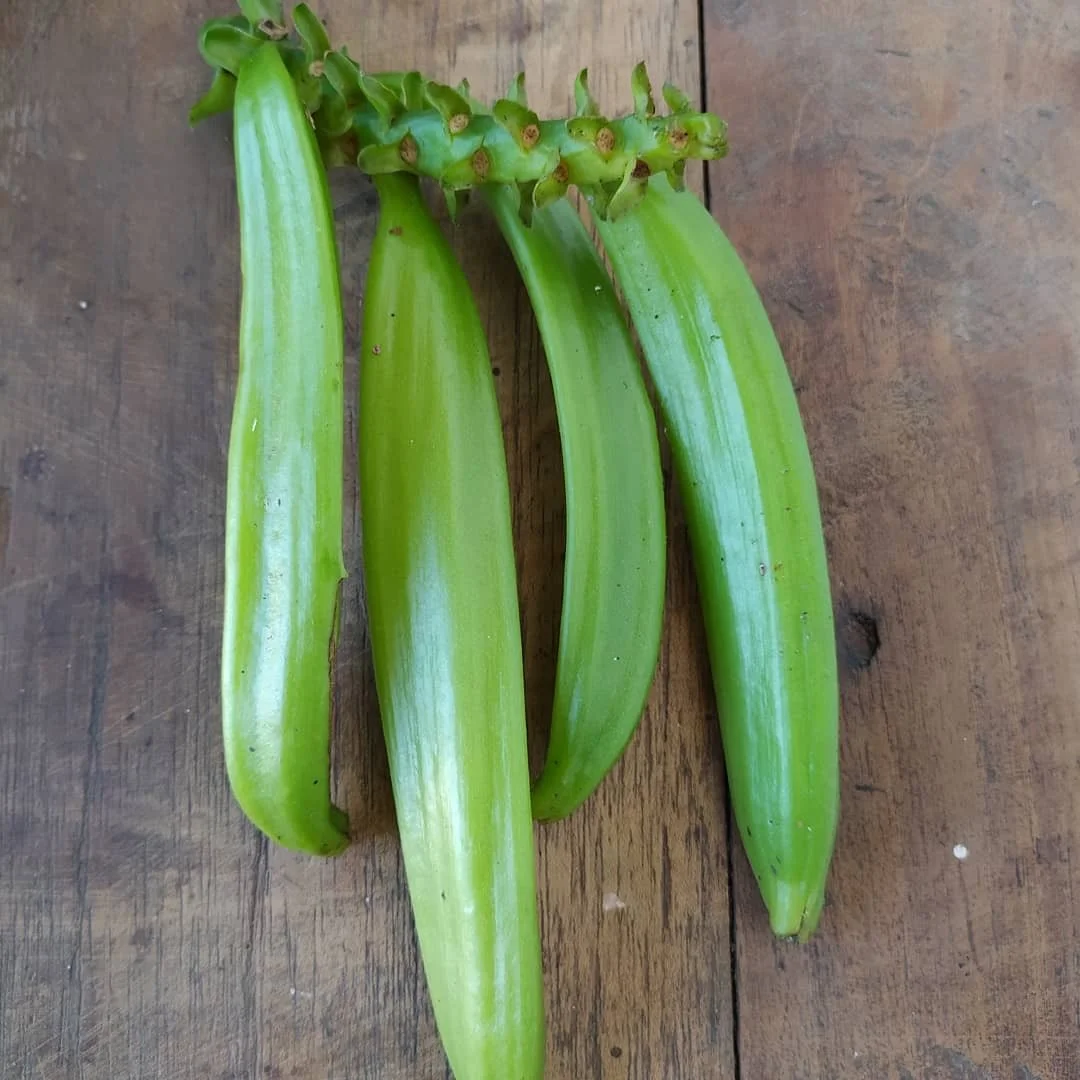
Photo credit: Akih Vanilla
VII. What This Means for a Food Business
Three structural moves, drawn straight from what the producers told us.
1. The sourcing question is becoming a location question. For a century the model was fixed: grow at origin, manufacture in the North, sell back. That model is unwinding — pushed by deforestation regulation, tariffs that fall harder on raw commodities than on finished goods, and the rising cost of operating in consuming countries. The companies reading this early are not only hedging price. They are asking where the next factory goes. Manufacturing at origin, joint ventures with producing-country firms, bringing know-how instead of extracting beans — these stop being gestures and become the efficient structure. This is also where new corridors open: as the regulatory load on traditional markets rises, demand is diversifying toward the Gulf and Asia, and the producers reading those corridors early are not waiting for European buyers to recover.
2. The category is bifurcating, and you need a position on both sides. Each of these crops is splitting into a synthetic, commoditised version and a real, place-bound one. These are not the same business. The synthetic side competes on cost and scale. The real side competes on story, transparency, provenance, scarcity and of course, flavor and health — and it is defensible precisely because it cannot be relocated or replicated. A company that treats "vanilla" or "cacao" as a single line item is mispricing its own risk. The strategic question is which side each product in your portfolio is playing, and whether you hold optionality on both.
3. The premium is built on the territory–product–health thread. The consumer pull our earlier posts identified — clean labels, shorter ingredient lists, origin transparency — meets its supply-side answer here. The real side of each crop sells on the link between where it grows, what it is, and what it does to the body that eats it. That thread is not a marketing layer wrapped around the product. It is the product. The companies that can tell it credibly — because they sourced it that way — own the part of the market that synthetic cannot reach.
And one realist note. The most common corporate response to a proven real-side player is not to build alongside it. It is to buy it. Knowing that is itself a strategic position — for the company doing the buying, and for the producer deciding whether to be bought.
Underneath all three: the intelligence that tells you where a crop is going does not live on the futures screen or in the procurement deck. It lives with the people who grow it. The future of these crops is being decided in the geographies that grow them. We would do well to listen there first.
Thank you to our online community for rightfully asking about the expert farmers perspective.
References
Cocoa first surpassed $10,000/tonne in March 2024 (CNBC) and peaked near $12,900/tonne in December 2024 before correcting through 2025 (ICCO; market data).
C. Bunn et al., "A bitter cup: climate change profile of global production of Arabica and Robusta coffee," and the PLOS ONE study confirming ~50% loss of Arabica-suitable land by 2050 (World Coffee Research; Science).
Madagascar supplies roughly 80% of the world's natural vanilla (Fair Labor Association; Bloomberg Businessweek).
A. P. Davis et al. (2021), rediscovery and assessment of Coffea stenophylla in Sierra Leone (Royal Botanic Gardens, Kew).
EU Deforestation Regulation (EUDR) due-diligence requirements affecting cocoa and coffee imports (European Commission; industry reporting).
Puerto Rico's cacao revival and the founding of Hacienda Jeanmarie / Jeanmarie Chocolat (The Chocolate Professor, 2026).
First Puerto Rican cocoa export in ~100 years — seven tonnes to Colorado, 2024 (W Journal PR).
Illegal gold mining ("galamsey") destroying Ghanaian cocoa farms; 100,000+ acres lost (National Geographic; Wilson Center).
Cocoa value capture in the Americas: Ecuador grinds <10% domestically, Brazil now a net importer, Mexico a net importer (CABI Agriculture and Bioscience, 2024).
The Chinantla as a center of vanilla origin with seven wild varieties, and historical tribute to Moctezuma (Etnofood; Slow Food).
Vanillin synthesised 1874 by Tiemann & Haarmann — the world's first synthetic flavour (American Chemical Society).