Forests That Feed: Gastronomy as a Thread in the Work of Keeping Forests Standing
A question we keep meeting from inside the field: when the families beside a forest need to make a living, what makes the standing forest worth more to them than the cleared one? Gastronomy is not the whole answer. We think it may be the thread that helps tie the answer together.
By Estefanía Simon-Sasyk, with José Pérez Navarro (Endémico Lab, Panamá) and Felipe Andrade Dávila
Mycelium Gastronomy Network · Field Intelligence Series · 2026
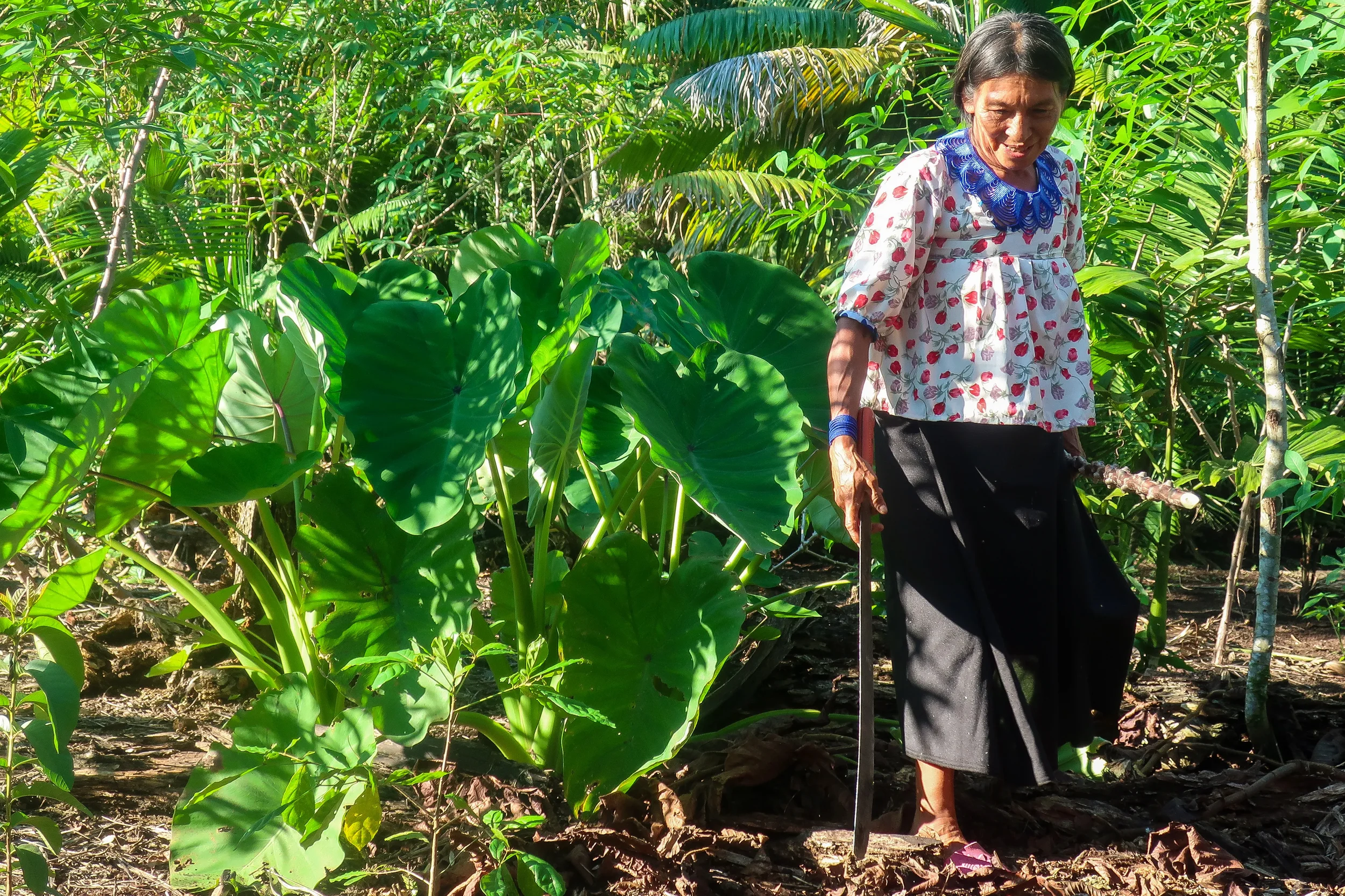
Fotografía del 8 de julio de 2024 que muestra a una mujer caminando por una chacra (huerta, en quechua) en Sharamentsa (Ecuador). EFE/Irene Morante De La Hera
Overview
Keeping a forest standing is rarely a problem of will and almost always a problem of livelihood. The people who live beside a forest are the ones who decide, season by season, whether it grows or shrinks — and they decide partly on the basis of what it lets them earn and eat.
The field of conservation knows this, and it has been moving for years: away from the older idea that nature is best protected by walling people out, and toward approaches that try to make people and ecosystems thrive together. This piece does not claim to replace that work. It adds one thread to it, from our particular vantage as a gastronomy network: the observation that a living forest only becomes a livelihood when its rare, place-specific abundance is turned into something people can eat and sell well, and that gastronomy is unusually good at doing that conversion, and at tying together the other pieces around it.
We are not arguing that gastronomy is the solution. We are arguing that it is a connective thread — a hilo conductor, as our colleague Chef José Pérez Navarro puts it — running through a mosaic of approaches: conservation, food production, tourism, non-timber forest products, and the rest. We build the case on field intelligence from practitioners in our network, and we are glad to have had it sharpened by people who know the conservation side far better than we do.
I. The Model That Is Being Left Behind
For about a century, one model dominated how the world thought about protecting nature: draw a boundary, keep people out, and treat human presence as a threat to be managed. It has a name in the literature — fortress conservation — and a specific origin. It begins in the late nineteenth century in the United States, with Yellowstone and Yosemite, and with the removal of the peoples who already lived there.¹ Colonial administrations carried the model abroad; international organizations later pressed governments across the Global South to build parks on the same template.¹
This is no longer the default it once was. It has been shown, repeatedly, to underperform — and much of the conservation field has moved on.² But it has not disappeared, and where it persists it carries real costs: communities displaced from ancestral land, denied resources they had long stewarded, sometimes criminalized for returning home.² For a network whose intelligence also comes from practitioners across the Global South, this is the assumption we still occasionally meet, embedded in projects we are asked to advise.
What has grown up in its place is more interesting. A large 2019 study found that vertebrate biodiversity on Indigenous-managed lands in Australia, Brazil, and Canada equalled or exceeded that inside formal protected areas.³ A 2026 synthesis of 111 studies in People and Nature found that three-quarters reported a positive relationship between Indigenous management and conservation outcomes.⁴ At the level of economics, the Dasgupta Review reframed biodiversity itself as an asset that our accounting has failed to value.⁵ And among the newer paradigms, the one we find most compelling is convivial conservation, which rejects the people-versus-nature split at the root of the fortress model and reorganizes the work around coexistence and shared benefit.⁶ It is broad, progressive, and inclusive — and the productive, gastronomic thread we describe here sits comfortably inside it rather than against it.
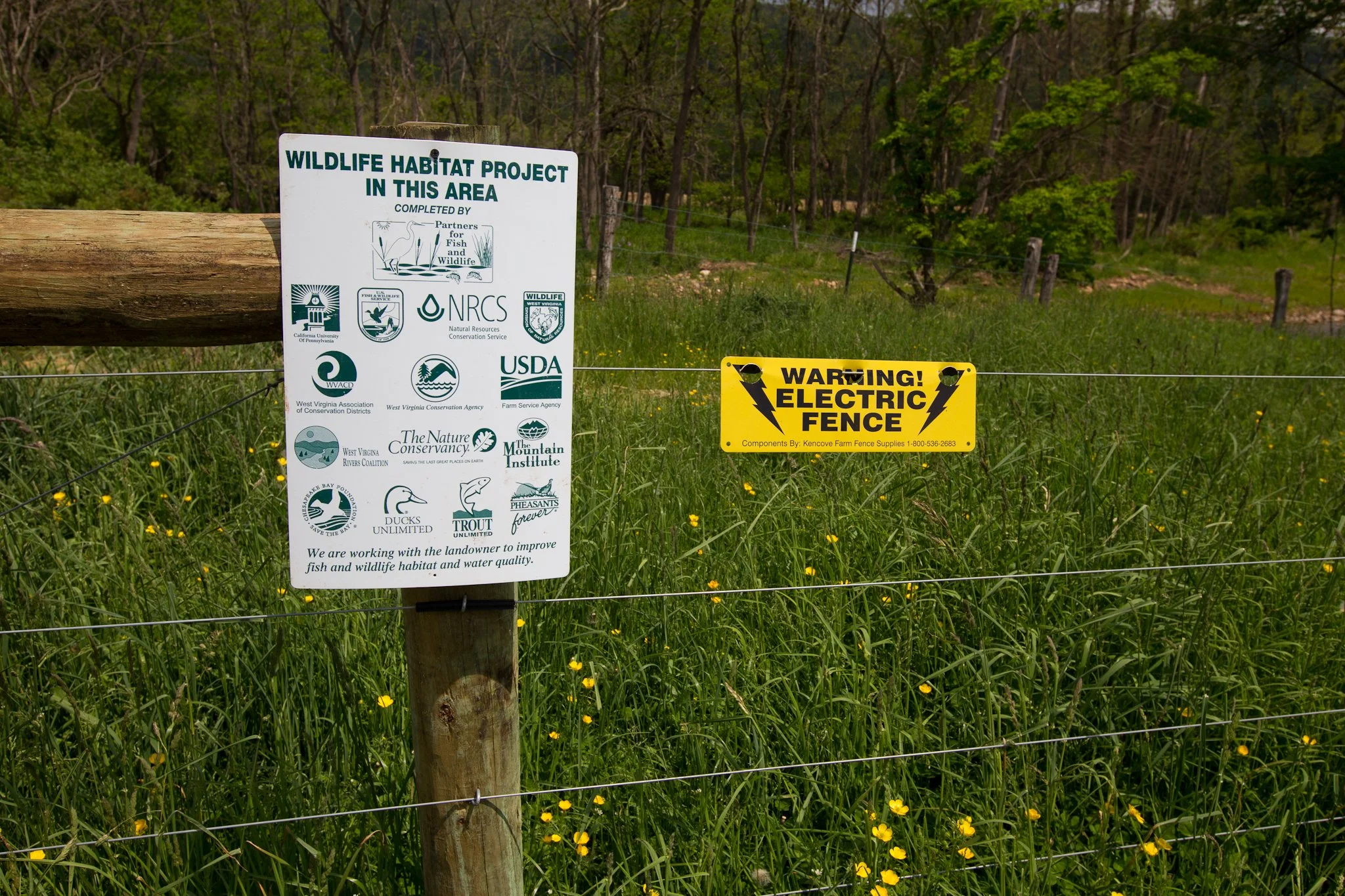
Wikimedia Commons. Partners for Fish and Wildlife Program, 17 May 2013, 13:31, Source: Celebrating 1 Million Feet of Conservation Fence in WV, Author: U.S. Fish and Wildlife Service Headquarters
II. People Are Not Automatically Nature's Stewards
It would be easy, and wrong, to replace "people are the problem" with "people are the answer." Human communities are not inherently connected to the ecosystems they live in, and assuming they are is its own kind of romance.
The clearest case of deep ecological stewardship is Indigenous and ancestral communities, where the link to the land is cultural inheritance built over millennia. At the other pole are recent settlers — people who arrived a generation or two ago and bring practices from elsewhere: I kept cattle there, so I keep cattle here, and the forest gives way to pasture. Between those poles sits a more common and more useful case, and it is the one Chef José works within.
In central Panama, where his project is based, there are no Indigenous communities; the population is a “mestizaje” of four or five centuries, with strong African ancestry, drawn from the many peoples that have passed through the isthmus. They are not ancestral guardians and they are not newcomers. They are rooted — long enough to hold real local knowledge and reasonably sustainable ways of producing, without an unbroken pre-colonial lineage. That middle position matters because it is achievable. You cannot manufacture five thousand years of belonging in twenty. But the rootedness that comes from generations of making a life in a place, and from understanding that the land's health secures your own, can be built and strengthened. It is aspirational in the right sense: a place many communities could actually reach.
III. A Forest Grown by Bees
José runs Endémico Lab in a tropical dry forest in Panama, where he keeps native stingless bees — meliponas. There are more than 500 species, the great majority in tropical ecosystems, and each is specific to its environment.⁷ A bee that thrives in his dry forest cannot be moved elsewhere; it belongs to a place and feeds on the particular plants of that place.
That specificity is the point. Stingless bees are among the most important pollinators of tropical forests, and meliponiculture — their husbandry, practiced across the Americas for centuries — is increasingly recognized as a tool for conserving the forests they depend on, because it generates, as one review puts it, "mutually reinforcing economic, social, and ecological incentives."⁷ The bees cannot be relocated, so the forest cannot be abandoned. More native forest, more bees; less forest, fewer bees, because there is nothing for them to eat.
And the honey reads the land back to you. By characterizing the pollen the bees collect — work José is doing with thesis students — you learn which native trees they feed on and which are becoming scarce. The hive becomes a diagnostic instrument, telling you which species to replant. Forest regeneration stops being a plan handed down and becomes an inventory built from below.
This is not only José's intuition; the same logic has now been demonstrated under a mass spectrometer. In the Sierra Madre of the Philippines, a team at the University of the Philippines profiled honey from two sites — including Palaui Island, where the Agta community produces honey sustainably — and found that the chemistry of each honey tracked the surrounding flora with remarkable precision: a compound linked to narra, the Philippine national tree, abundant only in samples from the island where narra grows; caffeine appearing where reforestation efforts had planted coffee; mangrove signatures showing up where mangroves were later confirmed.
The honey is, in the researchers' phrasing, a chemical fingerprint of the forest that produced it. What José is doing with pollen characterization in Panama is the same operation in a different language — and the implication the Filipino team drew is precisely the one that matters here: reforest with species that are not native to the ecosystem and the bees know it, and the whole pollination chain weakens with them. The forest analytics that emerge from honey are an unusually direct tool for guiding which species to plant back.
FIELD NOTE — PANAMA
“Reforesting only makes sense when you work with these bees. The more native forest you have, the more bees you can have. The less native forest, the fewer bees — because they can’t feed. It works like a domino effect.”
Around the bees, José integrates patios comestibles — edible patios: the family's own food crops, interplanted with high-value species the bees pollinate, such as vanilla pompona and porcelain cacao. The products sit on different clocks. A drought-resistant wild coffee yields in four months; specialty honey and vanilla in about two years; other crops anchor the long term. Short, medium, and long horizons, layered so no family bets everything on a single distant harvest. And, as José insists, the bees are not the hero of the story. They are one motor among several — a thread that helps articulate a whole.
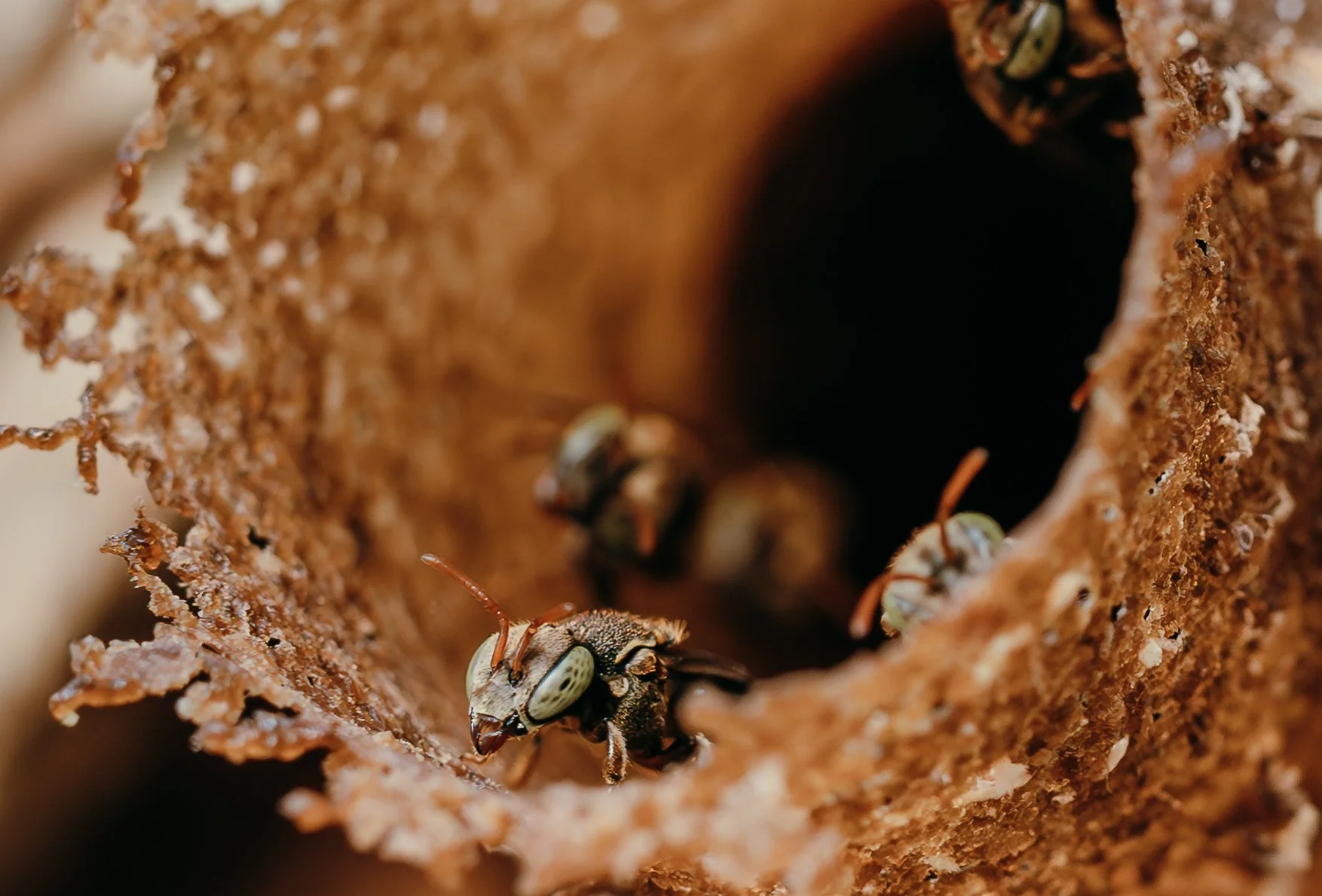
Photo credit: Rommel Rosales @rommel_art
IV. One Thread, Found in Many Places
We have met this shape before, on the other side of the continent. A few years ago we partnered with Fundación Futuro — the conservation and climate arm of the Ecuadorian holding Grupo Futuro — on MashpiLab, its food and gastronomy lab in the Chocó Andino, the cloud forest northwest of Quito. The foundation manages the Mashpi-Tayra Wildlife Refuge, with the goal of growing it from around 1,200 toward 5,000 hectares, set within a wider landscape of roughly 17,000 hectares.⁸ Its design pairs strict protection (land sparing) with sustainable production in the surrounding mosaic (land sharing); the neighboring communities benefit from the reserve's ecosystem services without intervening directly in its conservation core.⁸ MashpiLab lives on the land-sharing side of that design.
Our brief was concrete: co-create high-gastronomic-value products from the territory's most wasted, least valued crops — cassava and banana — that artisan producers could make and hotels would buy at a premium. We worked with the local agroecological producers, the Association of Women Entrepreneurs of Guayabillas (ASOMEG), and Metropolitan Touring as the first committed buyer. We interviewed both ends of the chain, ran a chef-led ideation that generated 184 ideas, filtered them to ten prototypes, brought network practitioners to Ecuador for twenty days to test recipes and train trainers, and costed each product for margin.⁹ It worked: several products are now on the hotels' weekly purchasing list.⁸
Doing the work taught us where a single thread reaches its limit. Revalorizing a wasted crop adds real value — and it does not, by itself, reorganize how the land is used. That is not a flaw in the gastronomic approach; it is the reason it has to be woven with others. None of the threads holds alone. Tourism on its own tends toward thin, extractive visits; a single crop tends toward price competition and volume traps; agriculture alone struggles for margin; conservation finance alone struggles to reach the household. The value is not in any one of them in isolation. It is in the weave — and gastronomy, because it touches food, culture, product, and market at once, is unusually good at connecting the threads.
That was our conclusion at MashpiLab. It is the conclusion Chef José reached independently with bees in Panama. And it is the one we had set down earlier still, as our own house view, in our writing on culinary rural co-workings: activate a rural economy through many products, channels, and markets at once, or it does not hold.¹⁰ Three contexts, one shape. The convergence is not proof that we are right; it is what a recurring pattern looks like when a network is connected to enough places to notice it.
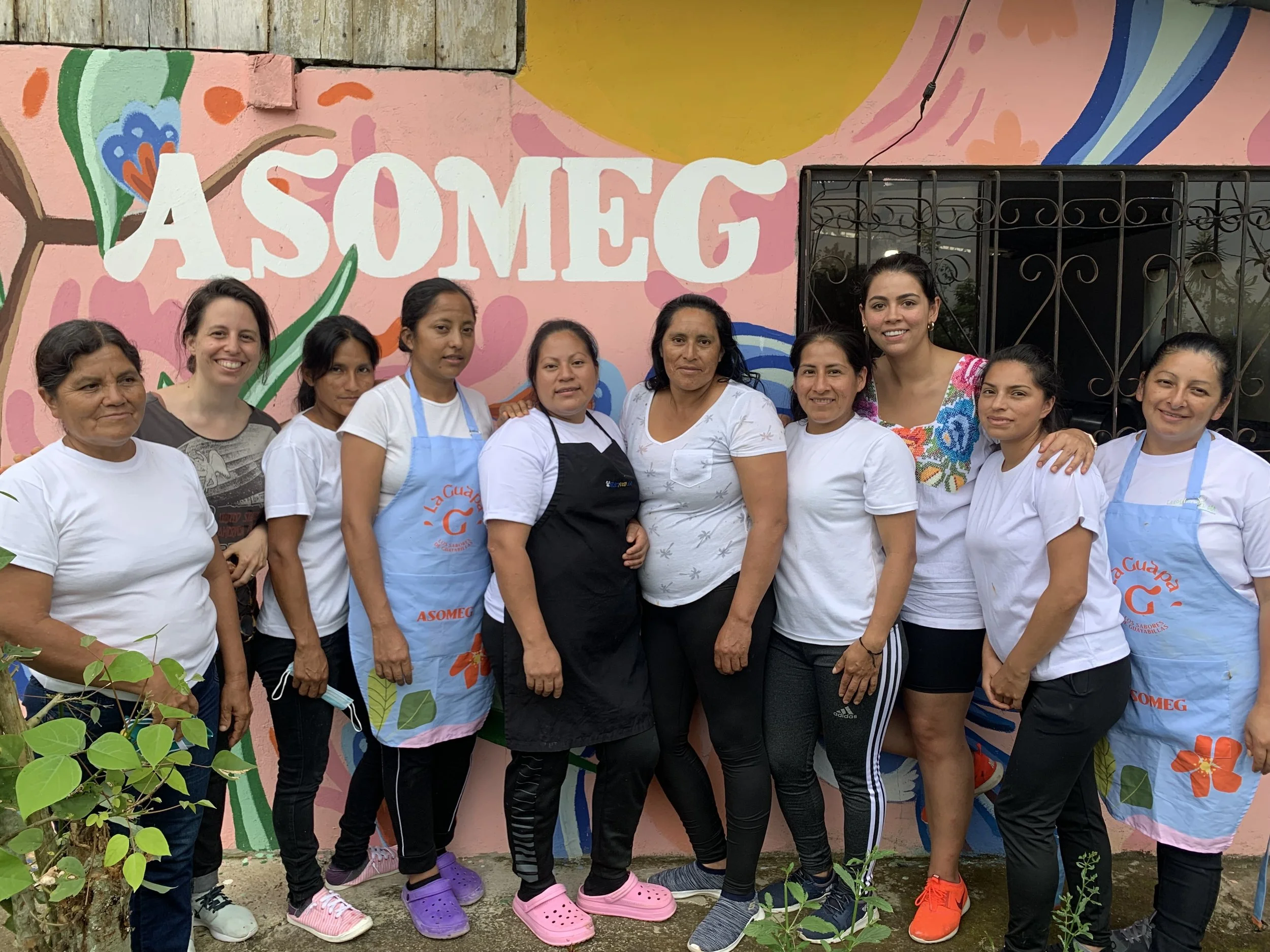
Credit: Maria Fernanda Barriga. After training session with ASOMEG cooperative in Guayabillas, Ecuador
V. People Don't Eat Money
There is a temptation, once you start talking about high-value products and premiums, to reduce the whole forest to a number. We want to name that temptation, because it is a trap.
Indeed, biodiversity is increasingly being made directly tradeable — biodiversity credits and even pollination-linked instruments are a fast-growing, if still immature, market.¹¹ But turning a living system into a single tradeable figure, whether a commodity price or a credit, is the same productivist logic that cleared the forest in the first place, wearing newer clothes. A community whose forest is worth exactly one number is fragile, because numbers move and buyers leave.
People don't eat money. What a forest can give a family is plural: food, and the nutritional diversity that actually depends on genetic richness; multiple income streams on different clocks; the cultural value of distinctive products; and ecological function that keeps the whole system alive. Resilience and food sovereignty come from holding several of these at once, not from converting them all into one. The goal is not to find the single thing the forest is worth. It is to diversify what it is worth.
Gastronomy earns its place here because it is one of the most powerful ways to make under-valued biodiversity legible — including, yes, in money, which is the language corporate buyers respond to. A specialty honey whose flavour is dictated by the flowers the bees visited, a cassava product redesigned for a hotel's weekly order: these convert resources into a premium that commodity markets cannot match, and that premium is what lets a household choose the standing forest. Frameworks that translate ecological value into financial terms — such as Return on Sustainability Investment thinking — help companies see what that conversion is worth.¹² We use that language deliberately. We just refuse to let it become the only language, because a forest reduced to a single metric is a forest waiting to be cleared again.
VI. How We See It
This is not a law, and we are wary of stating it as one. It is a working principle, held alongside the broader conservation thinking it belongs to — convivial conservation, the natural-capital reframing of the Dasgupta Review, the land-sparing-and-sharing landscape approach.
A forest tends to stay standing when it feeds the people who live in it — and gastronomy is one of the strongest threads for helping it feed them well. A boundary defended from outside lasts only as long as the funding and policing behind it. A forest that is genuinely part of a household's food, income, and identity has a more durable, more resilient kind of protection, because clearing it would be self-defeating. The work, then, is less about separating people from nature and more about weaving the living forest into their livelihoods — converting its rare, place-specific abundance into things the world values, and supplying the species-by-species, recipe-by-recipe, market-by-market knowledge that makes the conversion real. Not as the answer. As one good thread in the mosaic.
The goal is not a protected forest. It is a forest no one would think to cut.
VII. What This Means for Organizations
Stop treating the fence as the default. Where conservation budgets still flow toward separation and offsets, ask whether that is buying resilience or just buying distance. The evidence on community-managed land suggests the more durable returns often lie in the land-sharing mosaic, not only in the land-sparing core.³ ⁴
Build resilience, not just income. The most transferable lesson from the field is to diversify: products on short, medium, and long clocks; several income streams; and a deliberate move toward food sovereignty and nutrition, not only cash crops. A household with five threads survives the loss of one.
Treat local knowledge as infrastructure. The pollen characterization that tells José which trees to replant is not a community-relations line item; it is the mechanism of regeneration. Organizations that embed practitioner intelligence into sourcing build supply chains that are diversified, climate-adapted, and genuinely place-based.
Recognize gastronomy as a value-creation discipline, and one thread among several. Vanilla pompona, fine cacao, specialty honey, a redesigned cassava product — these are what let a standing forest pay, and they require real work: chef-led development, buyer intelligence, margin and food-safety analysis. Tools like Return on Sustainability Investment can show a company what that value is worth in its own terms. Treat it as a sourcing-and-innovation discipline woven with conservation, tourism, and production — not as a standalone fix.
An Invitation
This is one case, told from one vantage. It is not the whole picture, and we know that many people — Indigenous practitioners, conservationists, producers, cooks — have been living some version of this for far longer than we have written about it.
That is exactly why we want to keep going. Mycelium is a network of practitioners across the Global South, and our work is to surface place-based intelligence and connect it to the decisions of food companies, institutions, and territories. We would like to showcase many more cases at this intersection of gastronomy, ecology, and livelihood. If you are working on this — in a forest, a kitchen, a cooperative, a reserve — we want to hear from you, feature your work, and think alongside you. Conservation finance can help pay to keep a forest standing. Gastronomy, woven well with the rest, can help make it worth keeping. Write to us.
Felipe Andrade Dávila contributed to this piece in a personal capacity; the views expressed are the authors' own and do not represent any organization. With thanks to José of Endémico Lab for the field intelligence from Panama.
References
Hutton, M. New human-rights principles aim to end displacement through "fortress conservation." The Conversation, 2025.
Earth.Org. Conservation and the Displacement of Indigenous People. 2023.
Schuster, R., Germain, R. R., Bennett, J. R., Reo, N. J., & Arcese, P. Vertebrate biodiversity on Indigenous-managed lands equals that in protected areas. Environmental Science & Policy, 101, 2019.
University of British Columbia. Indigenous lands can outperform protected areas on conservation (synthesis of 111 studies, People and Nature, 2026).
Dasgupta, P. The Economics of Biodiversity: The Dasgupta Review. HM Treasury, 2021.
Büscher, B. & Fletcher, R. The Conservation Revolution: Radical Ideas for Saving Nature Beyond the Anthropocene. Verso, 2020 (convivial conservation).
Reyes-González, A. et al. Stingless bees in tropical dry forests: global context and challenges of integrated conservation management. Journal of Apicultural Research, 61(5), 2022.
Fundación Futuro / Grupo Futuro. Mashpi-Tayra Wildlife Refuge; Sustainable Territory Strategy. fundacionfuturo.org.ec; with corrections from F. Andrade Dávila (former conservation lead), 2026.
Mycelium Gastronomy Network. Development of New Products with High Gastronomic Value: A Project for MashpiLab. Case study. https://www.myceliumgastronomy.com/case-studies-1/wasted-crops-ecuador-mashpi
Simon-Sasyk, E. Culinary Rural Co-workings. Mycelium Gastronomy Network blog. https://www.myceliumgastronomy.com/blog/culinary-rural-coworking
On the emergence and immaturity of biodiversity-credit markets, see World Economic Forum and UNDP overviews, 2023–2025.
NYU Stern Center for Sustainable Business. Return on Sustainability Investment (ROSI) methodology.
Molino, R. J. E., Torreno, V., Rellin, K. F., Junio, H. A., et al. Metabolomic profiling of Philippine honey reveals chemical fingerprints of Sierra Madre forest ecosystems. Scientific Reports, 14, 2024 (Nature Portfolio). Plain-language overview: Encarnacion, A. D. P. The Forest in a Drop of Honey: How UP scientists uncovered the chemical fingerprint of the Sierra Madre. University of the Philippines, April 2026.