Many food companies have defined a climate strategy, communicated it and trained their people on it. The strategy still fails to appear in sourcing, product and sales decisions. This piece examines why that happens and what helped one company’s teams apply it.
By Estefanía Simón-Sasyk
Mycelium Gastronomy Network · 2026
Overview
A few years ago, a food company could publish a climate strategy in its sustainability report and count that as progress. I think that period has ended, because climate now affects which ingredients a company can buy, at what price, and from where. A climate strategy has become the way a company plans for supply disruption, and it only creates value once it changes decisions.
We worked for two years with a global food ingredient company that set out to bridge that gap through training.
I. The teams knew the strategy but had difficulty bringing it up with customers as part of the value proposition
The company had defined its climate strategy and communicated it to more than 100 leaders. Regional teams had completed training, with high completion rates and positive knowledge assessments. Sustainability was still absent from most customer conversations, responses to requests for proposals and sales plans.
The business developers understood what the strategy said. They could not answer three operational questions:
Which certifications matter to which customers?
How do I use sustainability in a sales conversation?
How do I present our commitments as a business advantage when the customer treats them as compliance?
The teams lacked operational context, meaning the knowledge of what the strategy implies for a specific customer in a specific market. This is a common condition. In a survey published by MIT Sloan Management Review, only 30% of employees strongly agreed that they understood how to improve their company’s sustainability performance through their own role.¹ [mit]

Only 30% of employees strongly agreed that they understood how to improve their company’s sustainability performance through their own role.¹
II. A climate strategy in food is a decision about the portfolio
Sustainability reports in food companies often leave out that a sound climate strategy changes what the company buys and sells. Some ingredients are becoming scarcer, more expensive or less predictable, and some growing regions are becoming harder to rely on.
The evidence for this is recent. A study led by Maximilian Kotz of the Barcelona Supercomputing Center examined 16 cases across 18 countries between 2022 and 2024 in which food price spikes were associated with extreme heat, drought or heavy rainfall.² Cocoa is the clearest case. Ghana and the Ivory Coast produce nearly 60% of the world’s cocoa, and unprecedented temperatures in February 2024 followed a prolonged drought, after which global cocoa prices rose by around 300% by April 2024 compared with the previous year.² [bsc] [iop]
The consequences reached product portfolios. Cocoa reached a record US$12,931 per tonne in December 2024, and major brands continued to reformulate products with less cocoa after prices had fallen by more than half.³ In December 2025, Nestlé removed the word “chocolate” from two bars in the United Kingdom because the reformulated recipes fell below the legal minimum cocoa content.³ Those companies reformulated under pressure, with little time to protect the product. [foodingredientsfirst]
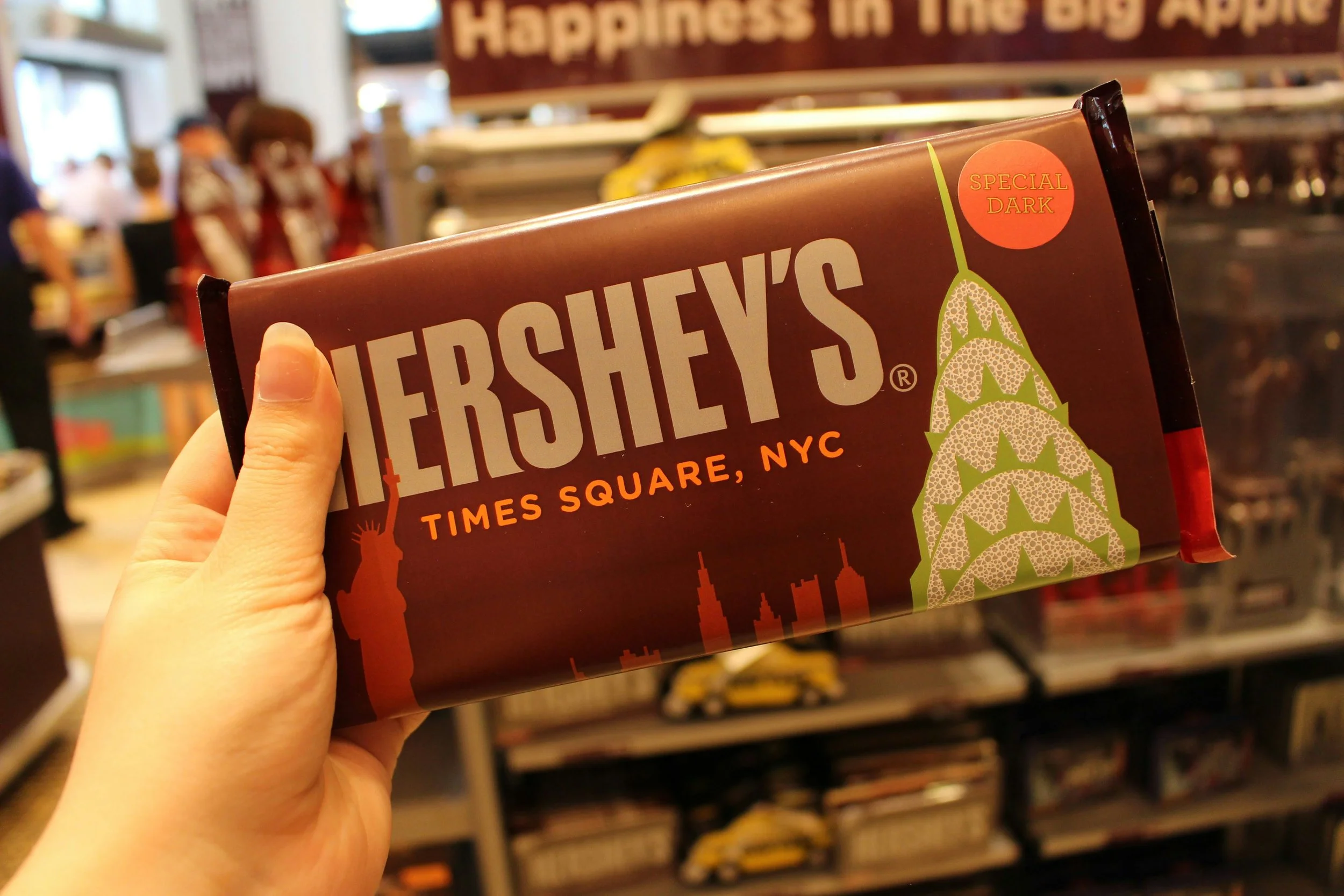
Reformulation has also cost companies consumer trust. In February 2026, Brad Reese, grandson of the inventor of the Reese's Peanut Butter Cup, publicly criticised Hershey for replacing chocolate with a vegetable-oil coating in some Reese's products, and the complaints spread widely on social media.⁴ Hershey has since said it will return some Reese's and Hershey's products to classic milk and dark chocolate recipes, with the changes taking full effect in 2027, and trade press has described its next task as rebuilding consumer trust⁴ [foodnavigator]. A loss of trust of this kind puts at risk the brand value that allows a company to hold its prices.
A climate strategy that works should therefore shape four decisions:
where the company sources, and how much it depends on any single origin;
which reformulations it starts now, while it still has time to test them with consumers and to explain the change to them;
which products enter the development pipeline, and which leave it;
which flavours and ingredients it builds consumer demand for.
The Hershey case shows why the second decision matters. A recipe change made under cost pressure and without explanation can protect margins for a period, and it can also weaken the trust that the brand depends on.
In our network, the people who grow, cook and trade food see these changes first. Foresight is the practice of reading those early signals and preparing options before the change appears in market data. Those options give a company time to test a new formulation with consumers and to explain it before cost pressure forces the change. They also give the company alternatives at the point when an ingredient or an origin stops behaving as it used to.
Which reformulations it starts now, while it still has time to test them with consumers and to explain the change to them?
III. Customers are asking suppliers to show how the strategy helps their own
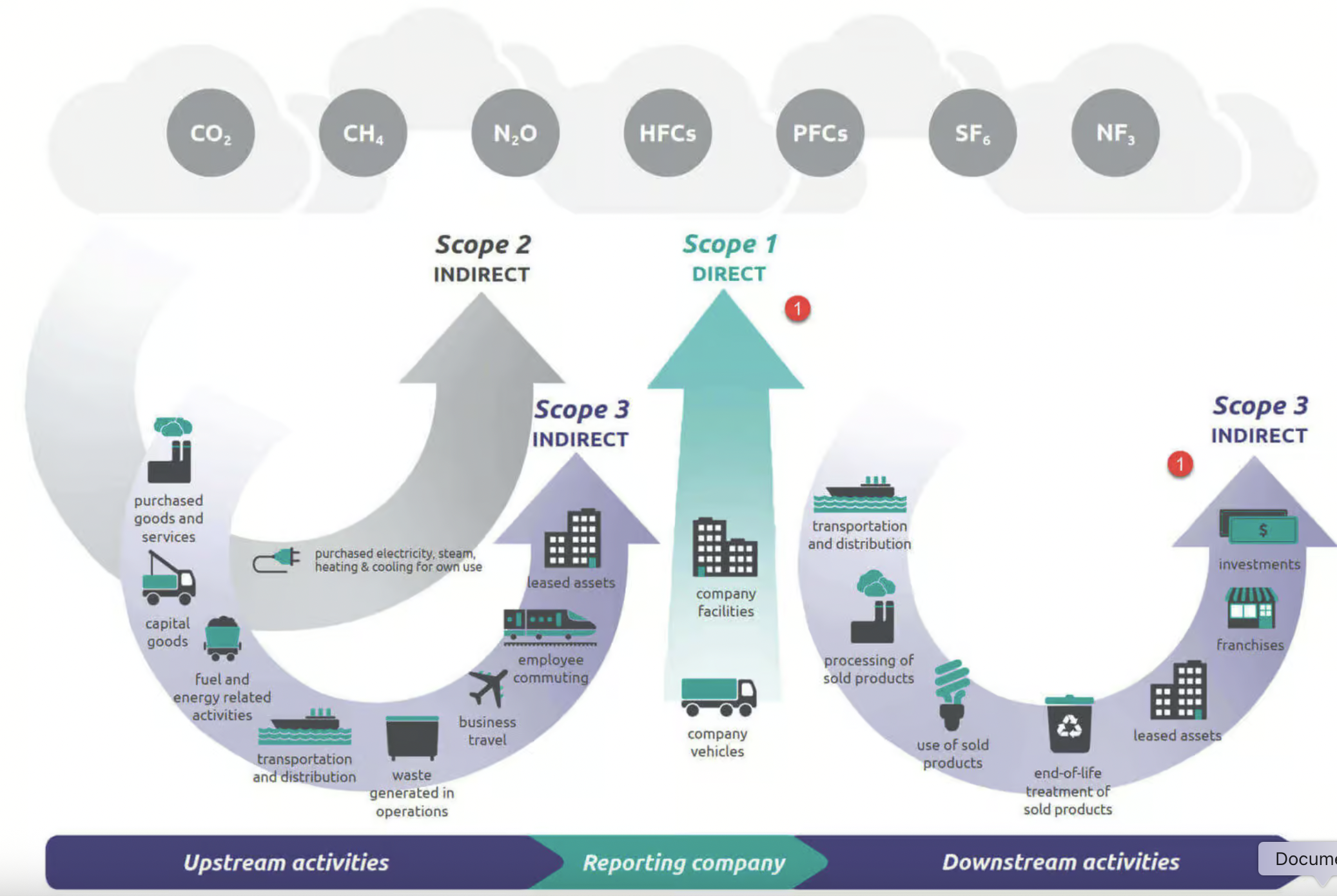
Retailers and brands cannot meet their own climate targets without their suppliers. Scope 3 emissions are the emissions in a company’s value chain outside its own operations, and research from Deloitte indicates that they can make up as much as 95% of total emissions for food and beverage manufacturers and retailers.⁴ [3degreesinc]
Customers have begun to attach dates to that dependency. In the United Kingdom, Sainsbury’s aims for the key suppliers that account for 80% of its Scope 3 emissions to have approved science-based targets in 2025/26, and Lidl GB is working toward the same for suppliers representing 75% of product-related emissions by 2026.⁵ [powerstar]
For a supplier, the relevant question changes as a result. Having a climate strategy is assumed. The customer wants to see how the supplier’s strategy contributes to its own plan, and a supplier that cannot show this is recorded as a risk in that plan.
IV. Each function holds a part of the strategy
A climate strategy that is managed only by the sustainability team tends to remain there. The decisions it should influence are made in other functions.
Procurement
Procurement decides sourcing risk and manages supplier relationships.
Question for this function: Which of our main ingredients are most exposed to climate?
Research and development
R&D decides which formulations and new products the company prepares.
Question for this function: Which reformulation has the strategy caused us to start?
Marketing
Marketing decides what the company says and which claims it makes.
Question for this function: Can we describe what we are doing without overclaiming?
Sales
Sales leads the conversation with the customer.
Question for this function: Can we explain how the strategy helps this specific customer?
Leadership
Leadership sets priorities and incentives.
Question for this function: Do our targets and our rewards point in the same direction?
The value depends on these functions being connected. If procurement secures a more resilient sourcing programme and sales never mentions it, the customer cannot see the value. If marketing makes a claim that R&D cannot support, the claim becomes a liability. Incentives matter as well. In the MIT Sloan survey, 49% of respondents described the lack of incentives as a major or moderate hurdle to improving sustainability performance.¹ My read is that this is a problem of culture and capability more than of technology. [mit]

In the MIT Sloan survey, 49% of respondents described the lack of incentives as a major or moderate hurdle to improving sustainability performance.
V. Three principles helped the teams apply the strategy
We designed the programme for the ingredient company after listening to the teams, and three principles came out of that.
Operational tools were used more than conceptual material. Templates, matrices and worksheets saw far more engagement than slide decks or readings, because people could apply them to an account the same week.
Business language produced engagement. Teams responded when sustainability was described in terms of business priorities and competitive advantage, and they disengaged when it was described as compliance.
Context mattered more than content. Generic training could not answer the question every team asked, which was how the strategy applies to their customer in their market.
Confidence in communicating sustainability to customers rose from 59% to 81%. The work is not finished. The strategy did begin to appear in the decisions and conversations of the people closest to customers. I think the three principles apply beyond sales, because procurement, R&D and marketing each need the same translation for their own decisions.
FOOD FOR THOUGHT
Which of your company’s sourcing or product decisions in the past year was changed by its climate strategy?Could each function listed above name the part of the strategy it is responsible for?
And if a customer asked how your strategy supports its own targets, who in your organisation would answer?
Conclusion
When a climate strategy is absent from sourcing choices, product decisions and customer conversations, the strategy document is rarely the cause. The cause is usually that no one has translated the strategy into the decisions each function makes. That translation is slow work, because it happens function by function and depends on people feeling confident enough to act. Which function in your organisation would you start with?
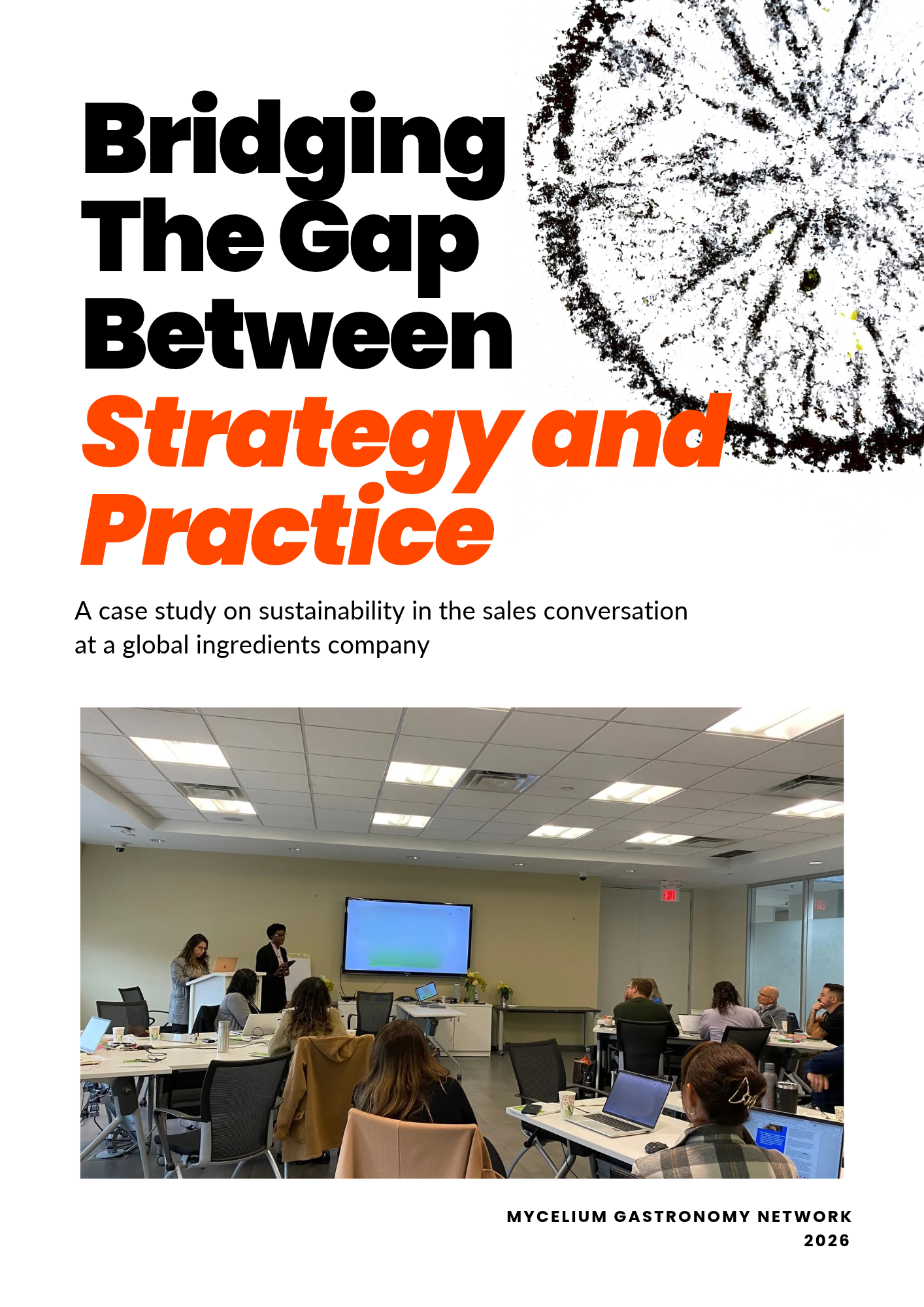
Read the full case study: Bridging the Gap Between Strategy and Practice.
References
MIT Sloan Management Review. Sustainability Progress Is Stalled at Most Companies. 2023.
Kotz, M. et al. Climate extremes, food price spikes, and their wider societal risks. Environmental Research Letters, 20(8), July 2025.
Food Ingredients First. After the spike: Cocoa’s volatile new norm forces structural industry shift. December 2025.
Weinbren, E. Hershey's next move: Rebuilding trust after the cocoa cuts controversy. FoodNavigator, 4 June 2026.
Deloitte research on Scope 3 emissions in food and beverage, as cited by 3Degrees, 2026.
Sainsbury’s and Lidl GB supplier targets, as reported by Powerstar, 2026.
Mycelium Gastronomy Network. Programme evaluation for the client company. Unpublished.