Dubai Future Forum — Shifting Terrains
We brought TRANSFORM to the Dubai Future Forum — a sensory workshop on climate migration and food.
Client: Dubai Future Foundation
Sector: Government · International futures community
Service: Foresight
Location: Dubai · Year: 2024
Result: : A 3-hour TRANSFORM workshop at the Dubai Future Forum 2024 ("Shifting Terrains") that moved 30+ foresight practitioners, policy professionals and transformation leaders through an embodied climate-migration scenario — preparing food in scarcity, navigating shocks, and reflecting on resilience and adaptation under forced movement.
The Dubai Future Forum, hosted by the Dubai Future Foundation, is one of the world's most prominent futures gatherings — bringing together thousands of practitioners, policymakers, and institutions at the Museum of the Future and surrounding venues. Their 2024 theme, Transforming Humanity, called for sessions that didn't just discuss the future but let participants inhabit it.
We proposed a session that would do what most foresight workshops can't: make climate migration felt, not just modelled.
The Challenge
How might we move a roomful of foresight practitioners from intellectual analysis of climate migration to embodied empathy and methodological insight — in a single three-hour session?
How we tackled it
Co-design with a four-person facilitation team
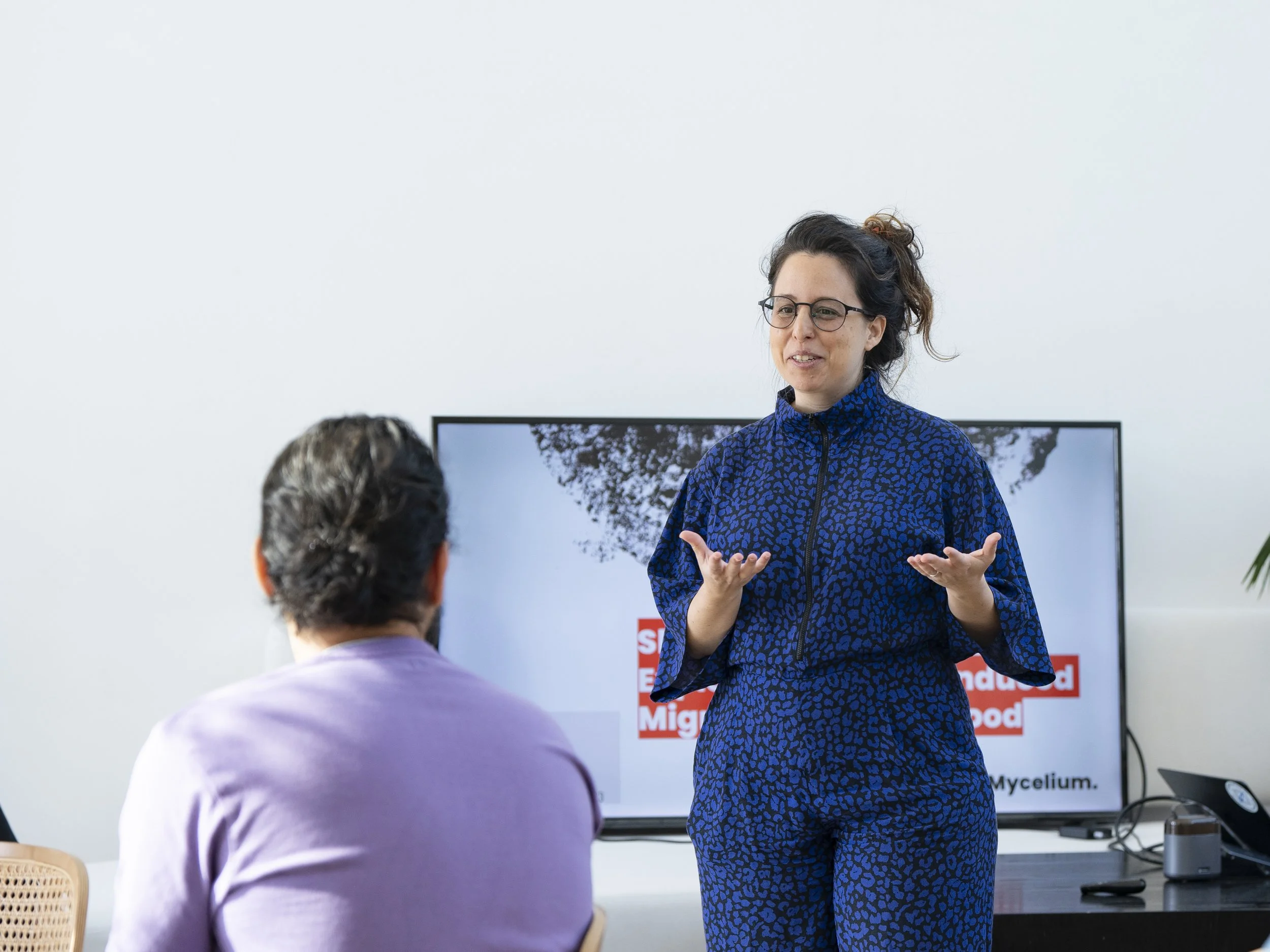
The session, On the Go: Immersive Climate Migration Experience, was co-designed and co-facilitated by Estefania Simon-Sasyk (Mycelium), Siddhi Ashar (Forum for the Future / NGFP Fellow), Daniel Riveong (Plural Futures), and John Sweeney (who had previously facilitated foresight sessions for IOM, the UN Migration Agency).
Designing the immersive scenario
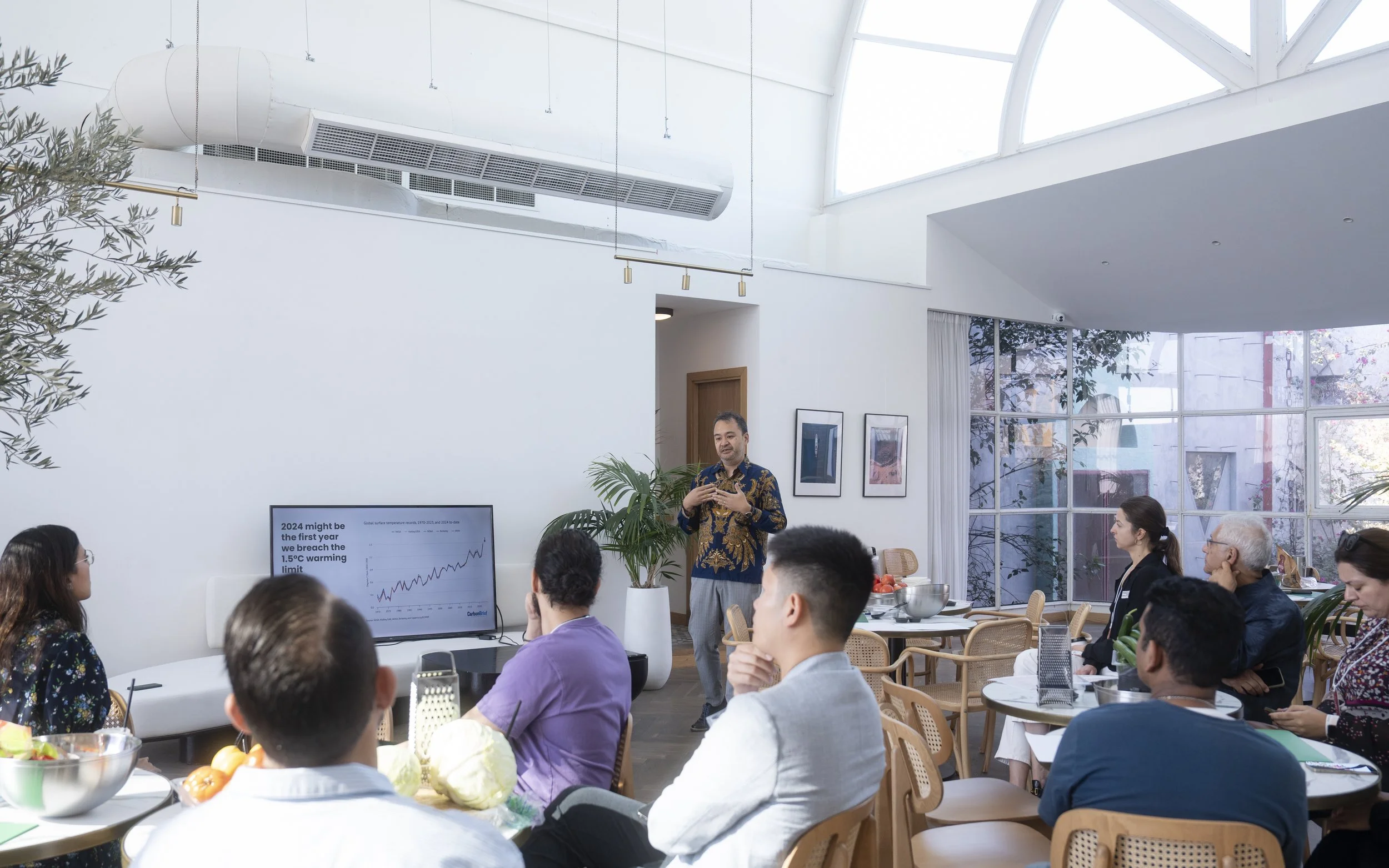
We built a speculative environment using an original soundtrack, projected visuals of disrupted landscapes, and aromas — earthy, smoky, migratory. Participants were placed in a continuation scenario: extreme weather, failed harvests, rigid borders, and mass migration. The scene-setting borrowed from speculative fiction with plausible headlines: "Drought pushes millions to the edge of survival." "Borders close as resource wars erupt."
Group themes
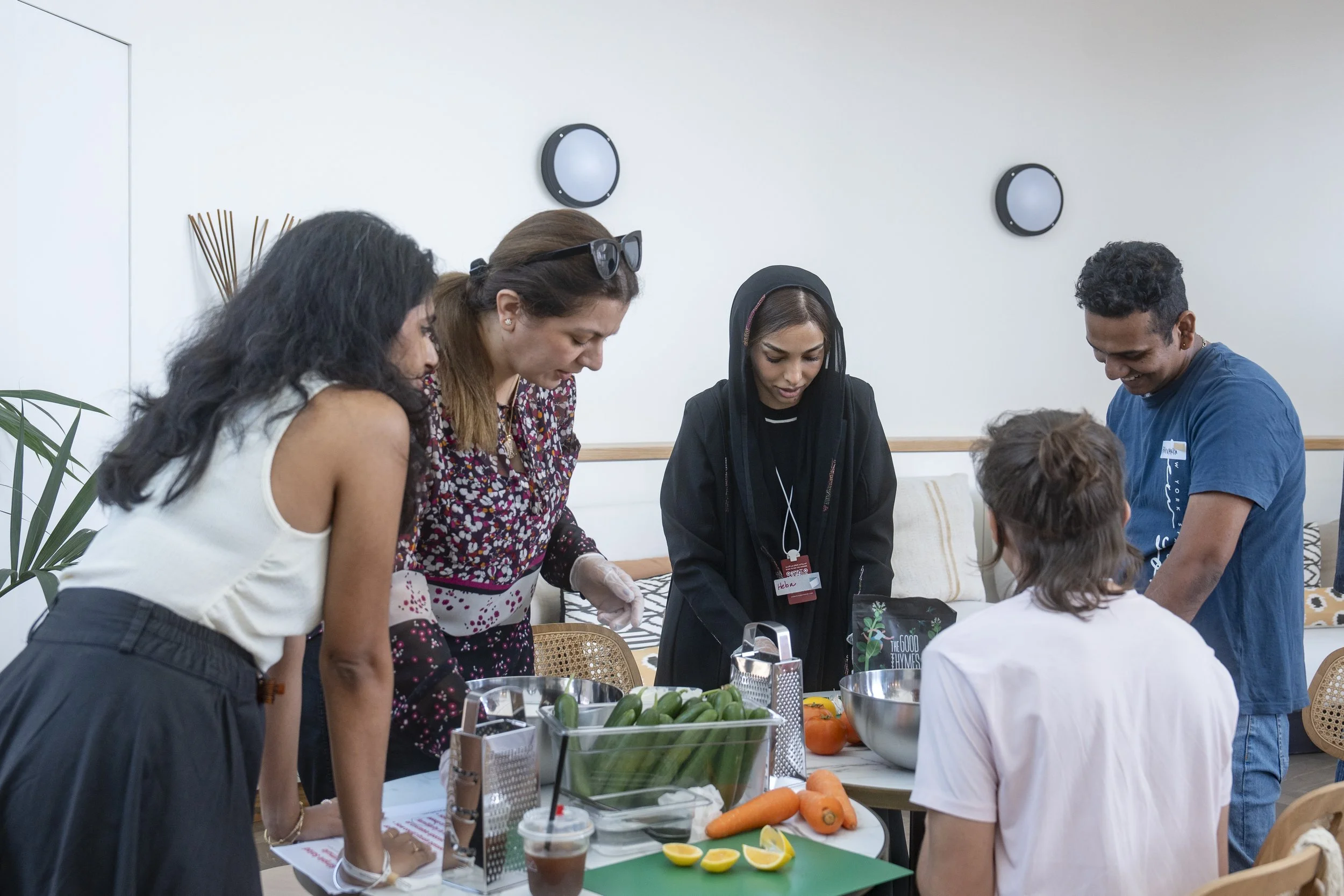
We organised participants into small groups around five thematic lenses on climate migration: Adaptation, Resource Scarcity, Belonging, Power Structures, Self-Care. Each group received a limited bag of ingredients and tools — nuts, herbs, vegetables, dried fruits — and a custom set of reflection prompts.
TRANSFORM as the engine
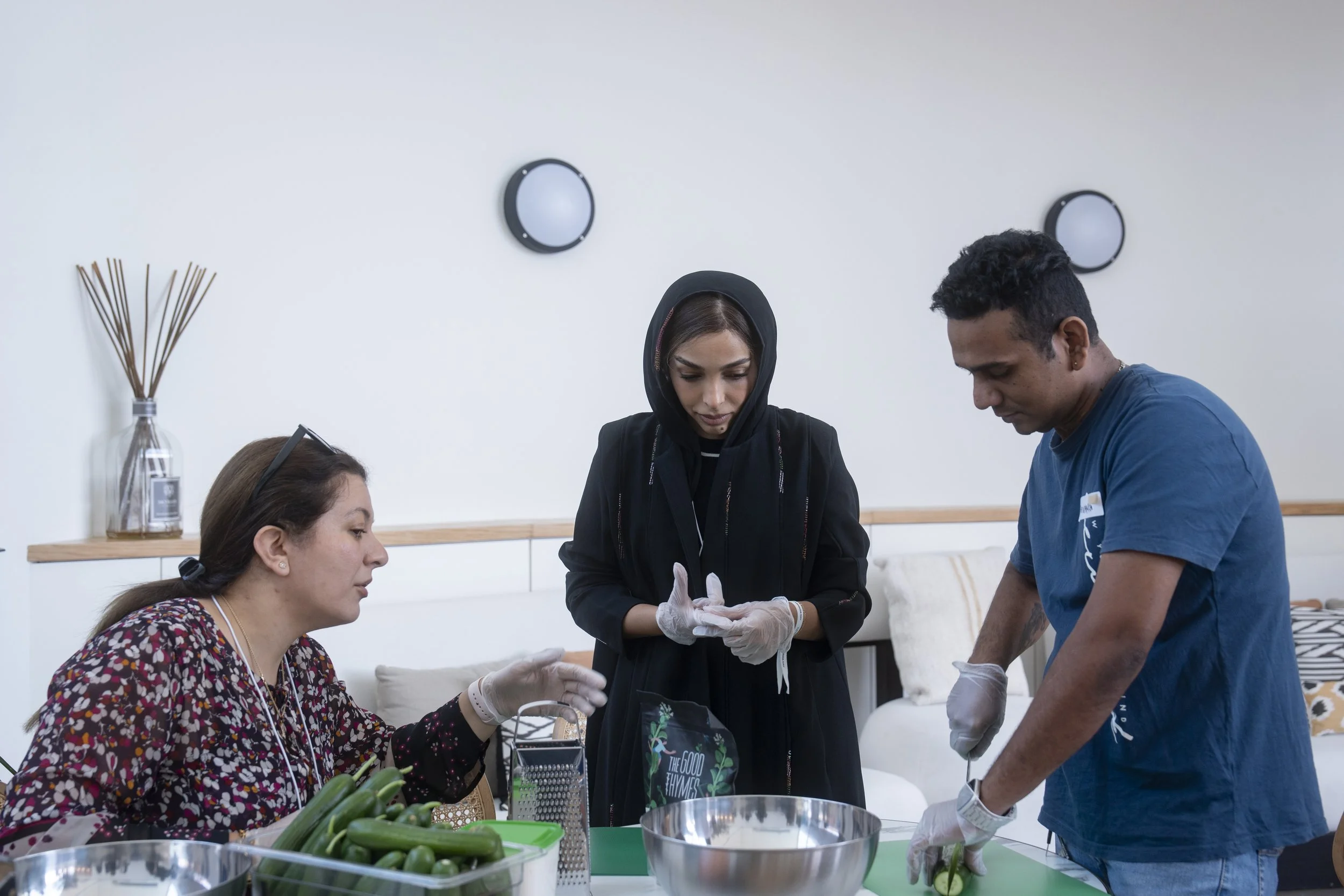
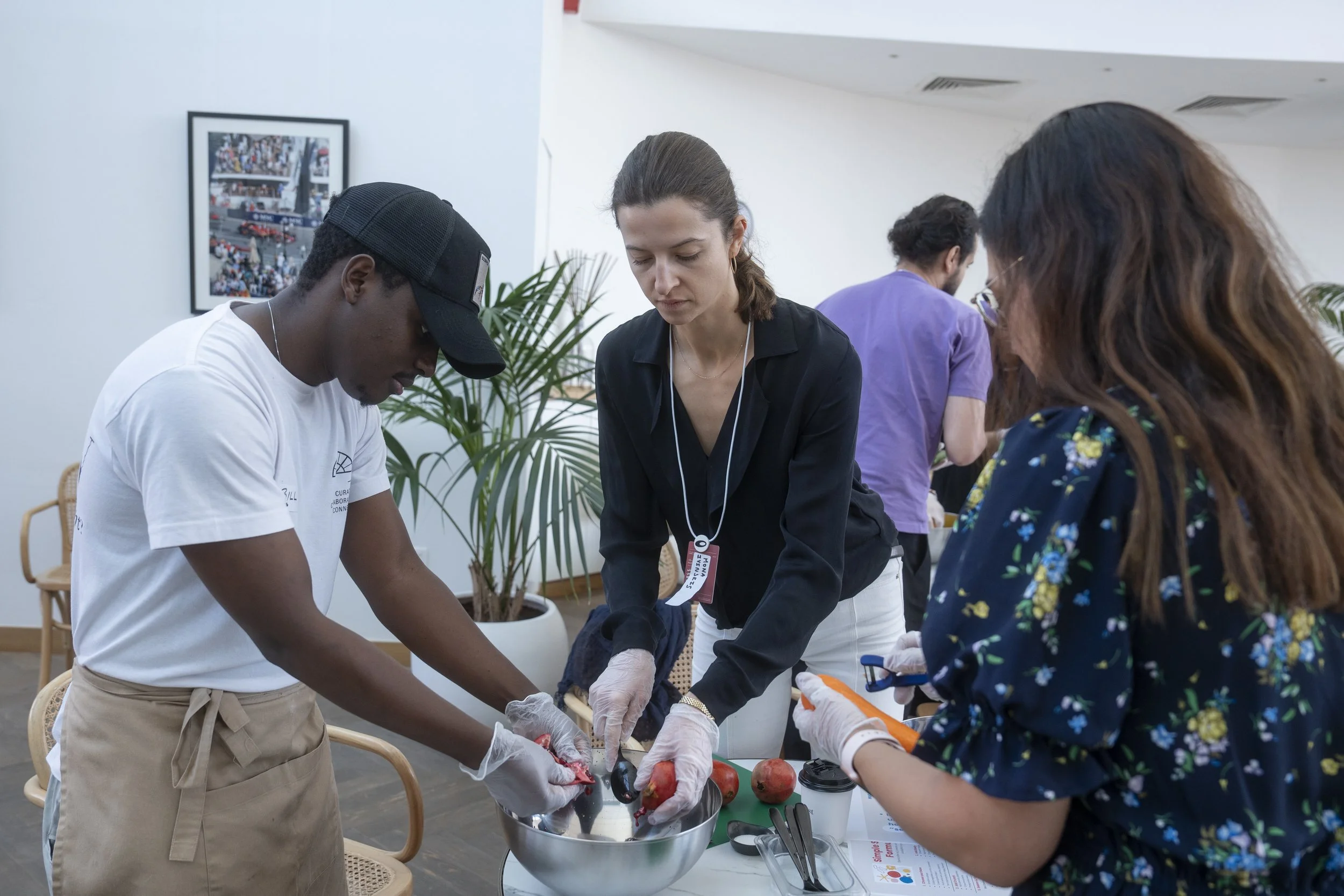
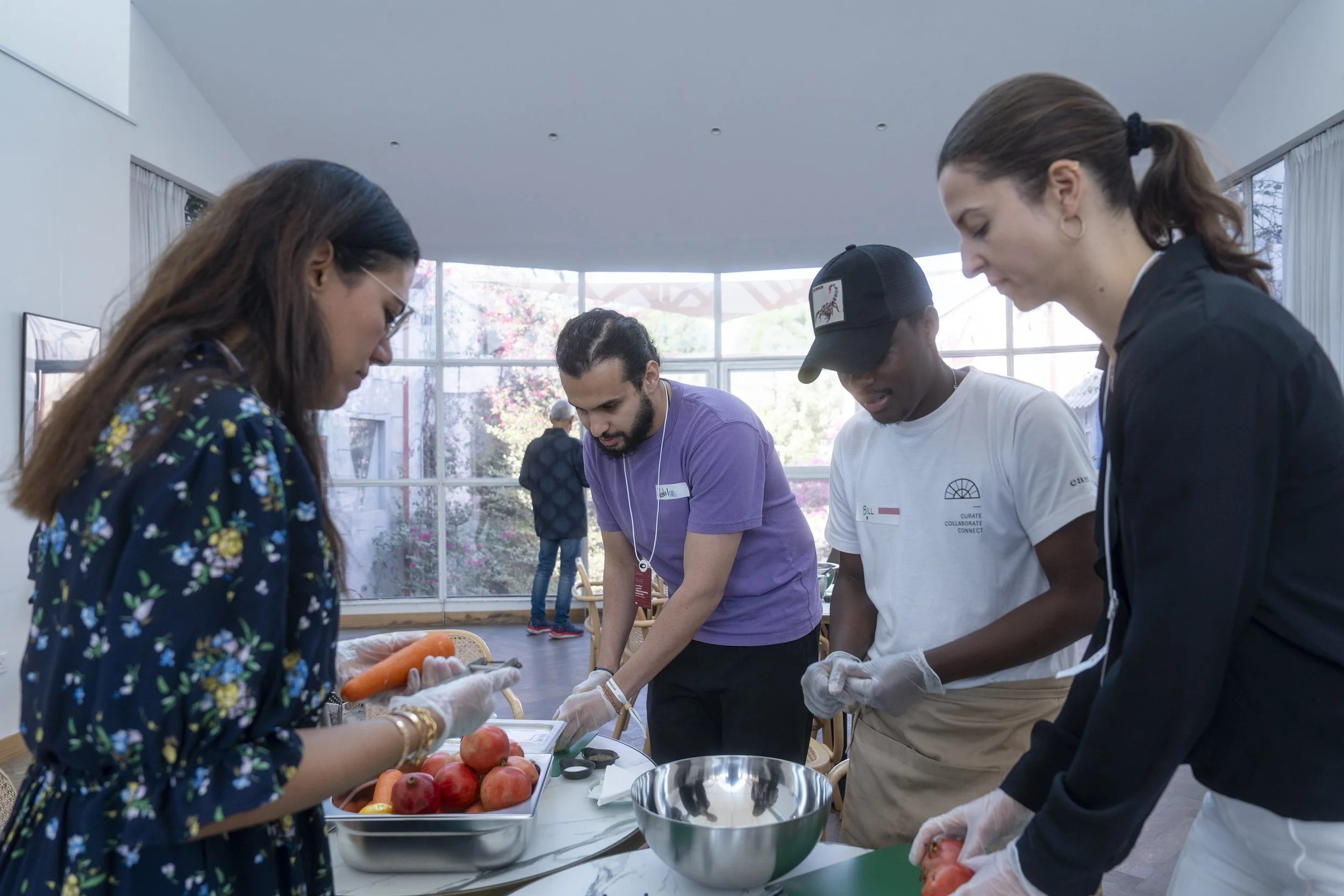
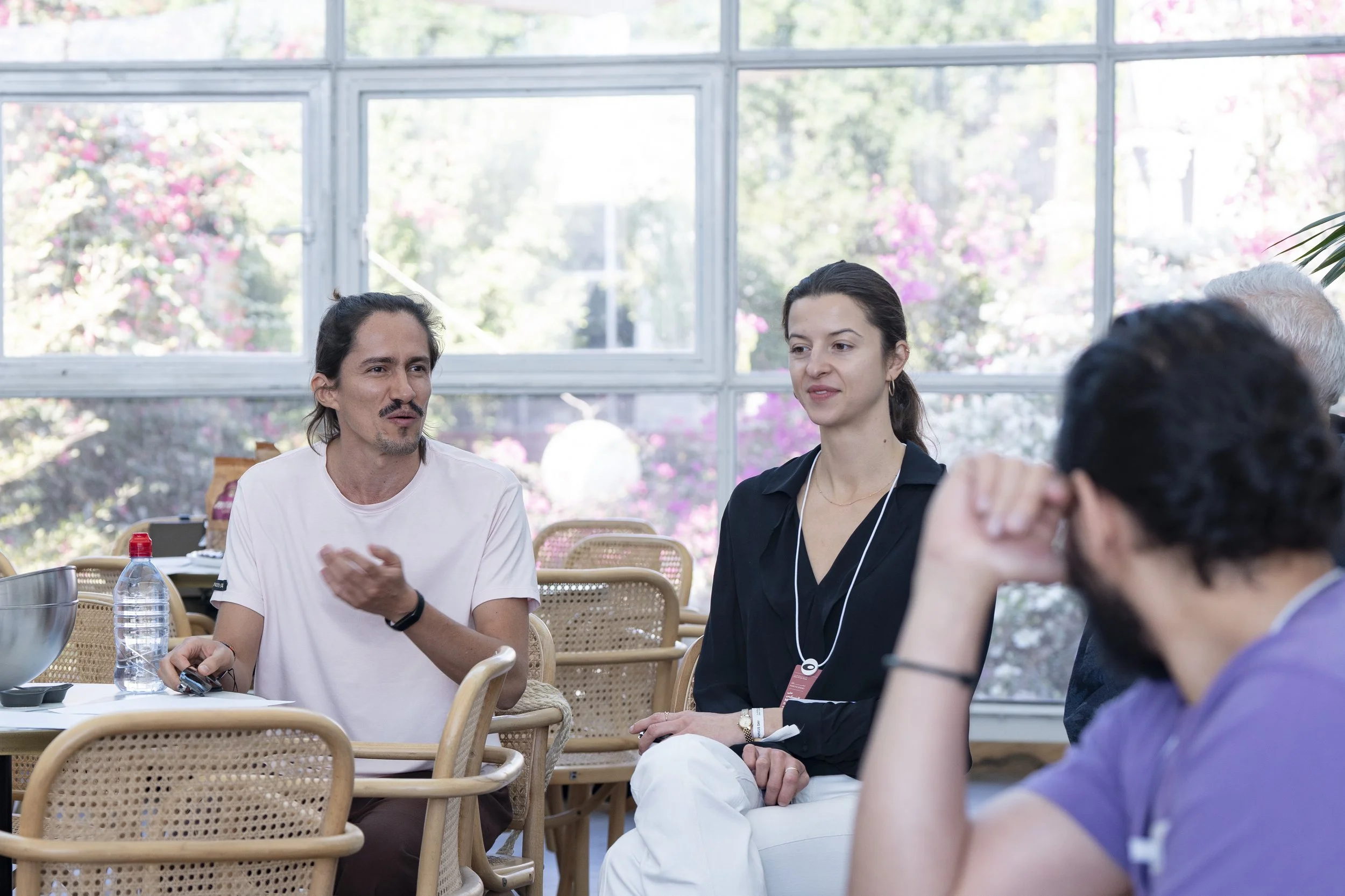
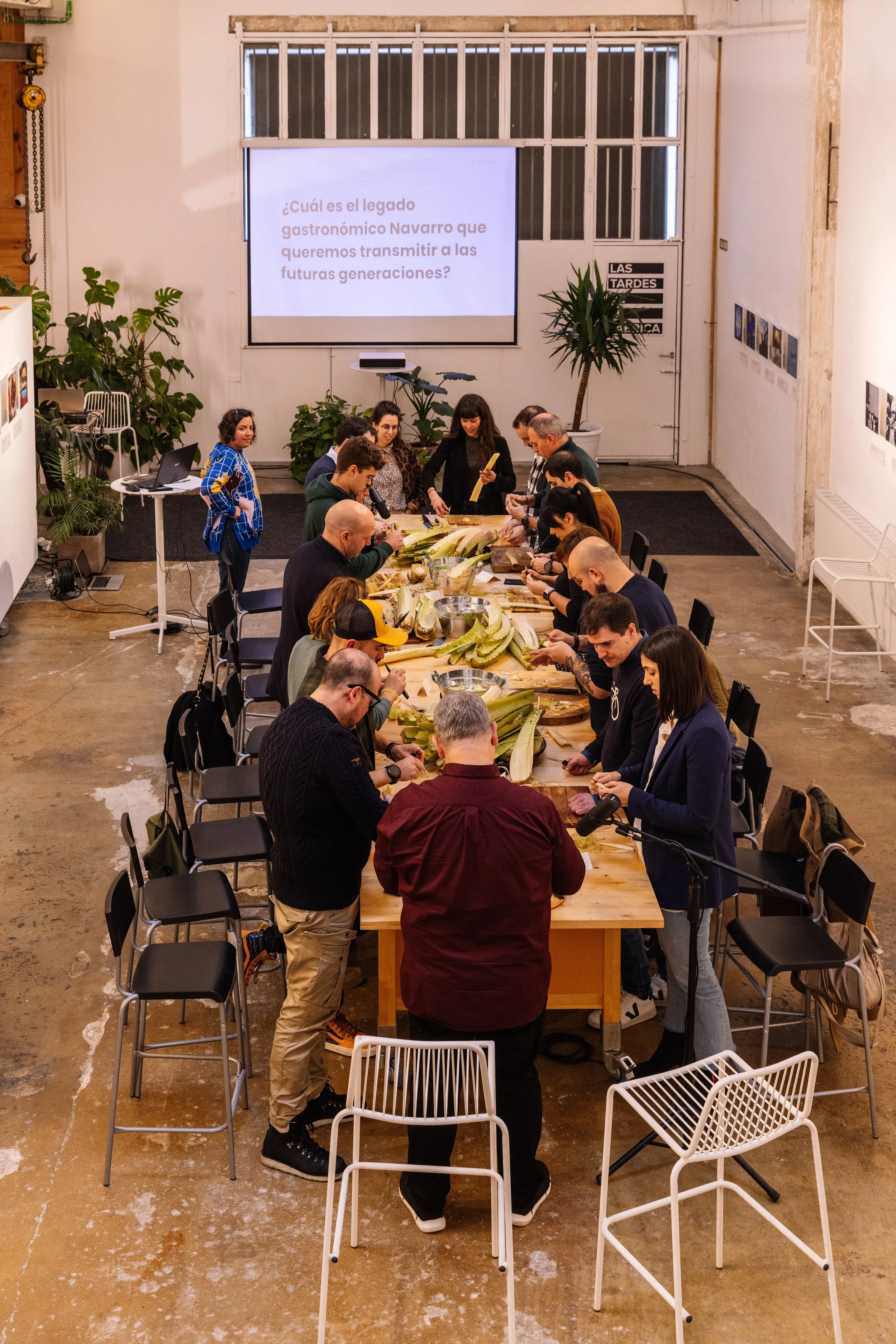
The group cooking task was where TRANSFORM did its work. Participants assembled simple, cold meals using only their hands (plucking, shredding, opening) with a brief mindfulness opening. As they prepared, conversations emerged naturally about scarcity, taste under pressure, and unfamiliar ingredients in new terrains.
Shocks and forced regrouping
Midway through, custom "shocks" broke each group's flow: a key ingredient was suddenly contaminated; a colored visa-card system forced half of each table to migrate to the next group, taking only 10% of their work with them. The new tables had to build shared meals across different lines of conversation, different foods, and different identities.
Communal meal and reflection
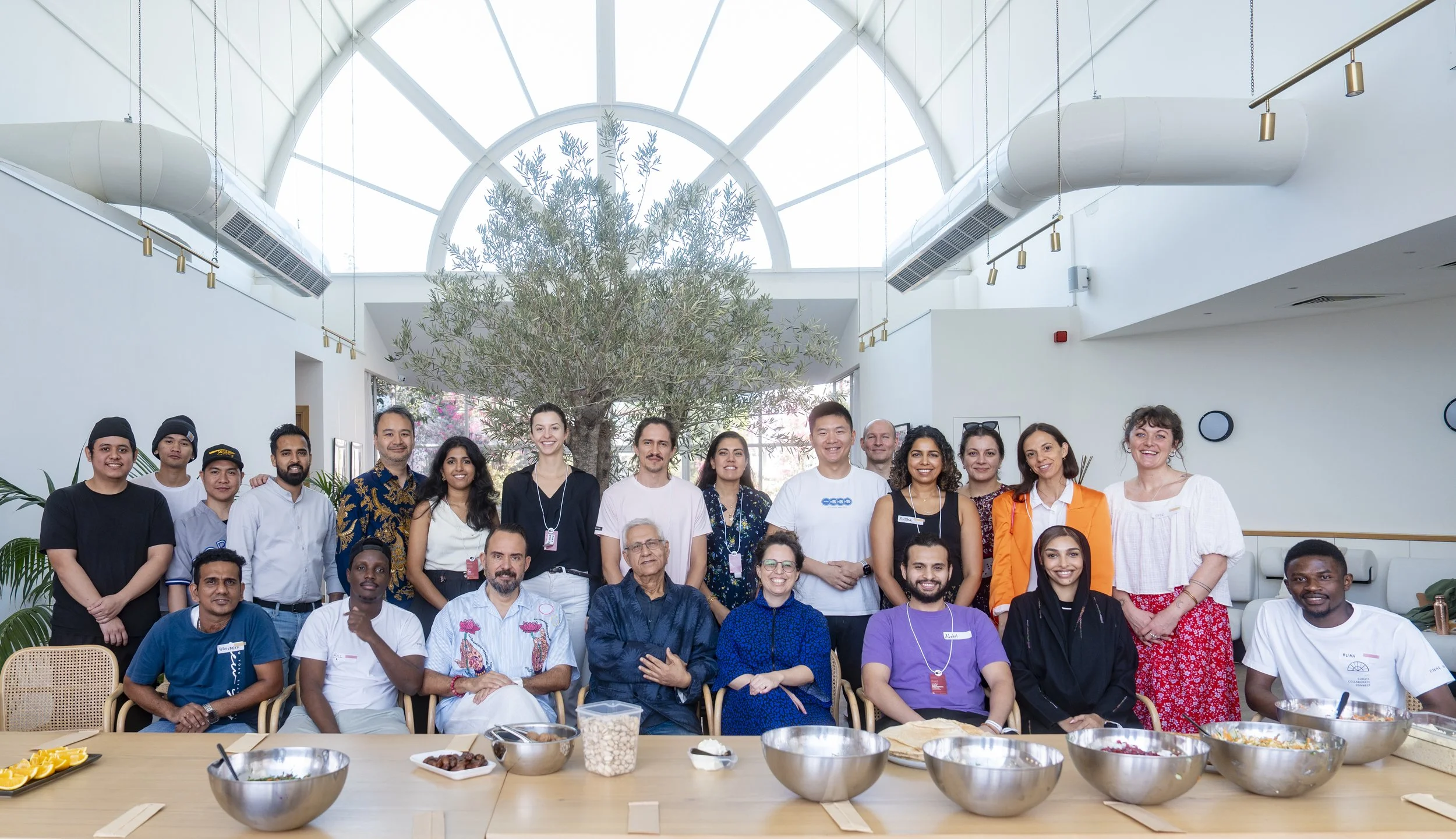
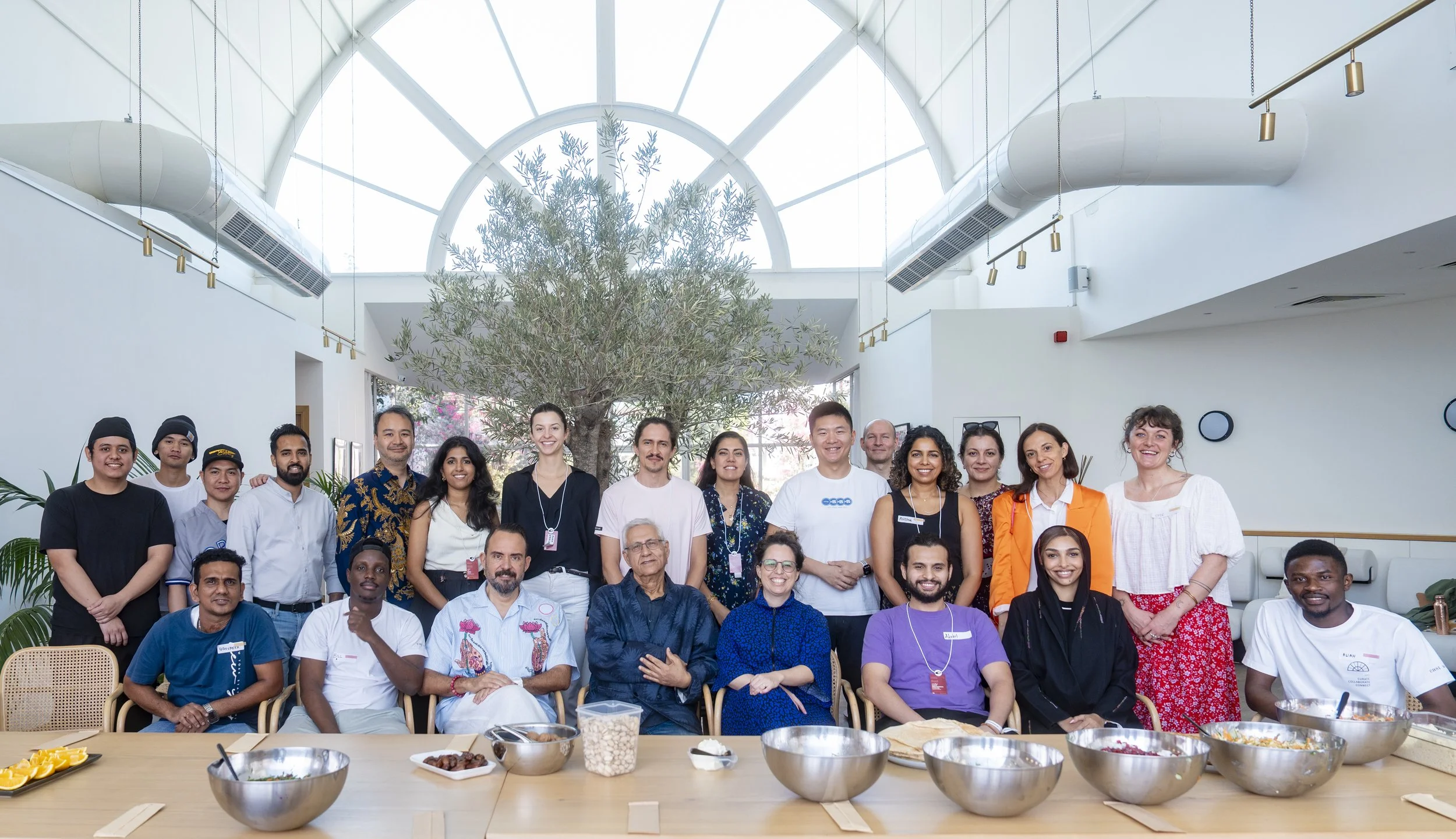
The session closed with a communal meal at a long table and a structured reflection on what the experience surfaced — both as practitioners working with vulnerable populations and as designers of methodologies for participatory imagination.
Deliverables
A 3-hour fully designed and facilitated workshop
Original soundtrack and projected visuals
Speculative-scenario script with plausible 2050-era headlines
5 thematic-group reflection prompt sets
Salad-guide instruction sheets, shock cards, colored visa cards
A communal-meal closing format
Post-session debrief for DFF organisers
Meet the Team Involved
Daniel Riveong
Estefania Simon-Sasyk
Siddhi Ashar
Dr John Sweeney
“Attending Shifting Terrains: Exploring Climate-induced Migration Through Food with Estefania, Siddhi, John, and Daniel was one of the most thoughtful and deeply embodied workshop experiences I’ve encountered.
What made it exceptional was its ability to move beyond conventional workshop structures and create something profoundly human. Through participatory design, sensory engagement, and cultural storytelling, the experience transformed a complex issue like climate-induced migration into something tangible, personal, emotional, and deeply reflective.
Rather than treating foresight as purely intellectual or overly structured, the workshop created space and conditions for insight to emerge through culture, storytelling, and the most universal human experience we share: food. Sitting together afterward and experiencing the gastronomic creations shaped by our collective stories felt less like a workshop conclusion and more like a family gathering rooted in shared meaning, reflection, and connection.
What made this methodology so powerful was its ability to bridge futures thinking with embodied experience. It reminded me that some of the deepest reflections do not always emerge through hyper-optimization, but through thoughtfully designed but organic moments of presence, pleasure, and exchange.
Truly, this is a methodology with universal relevance because food, at its core, is one of humanity’s most powerful connectors.”



Mycelium used the TRANSFORM method to help the Focus Inside team reflect on the future of well-being through an embodied, participatory experience.