The Stepping Stone Theory of Plant-Based Adoption
How the commercial contraction of alt-protein is best understood as evidence of progress, not failure — and what it means for food companies navigating the next phase of transition.
Mycelium Gastronomy Network · Field Intelligence Series · 2025

Overview
Between 2015 and 2023, the alternative protein sector attracted billions in investment, generated some of the most-discussed food products of the decade, and then declined sharply in sales, shelf space, and investor confidence. The prevailing industry reading of this arc is that plant-based meat failed to achieve mainstream adoption.
This post argues the opposite: that the alt-protein wave succeeded at the task that matters most in food system transitions — the construction of cultural infrastructure — and that its commercial contraction is not evidence of failure but of completion. Building on established frameworks from sustainability transitions research and our own practitioner intelligence gathered across 30+ countries, we propose what we call The Stepping Stone Theory of Plant-Based Adoption: the idea that food culture transitions happen in sequential waves, where each wave normalizes the conditions for the next, and where the failure of a wave on commercial terms is frequently the success of that wave on cultural terms.
We further argue that a second, more durable wave is now underway — economically motivated, chef-led, and structurally distinct from its predecessor — and that organizations that misread the contraction of Wave 1 as a signal to exit the space will miss the most strategically significant entry point of the next decade.
I. The State of Alt-Protein: What the Data Shows
The numbers on alt-protein are well-documented and, on the surface, discouraging. Beyond Meat's stock price fell over 95% from its 2019 peak. Plant-based meat sales in the US declined for multiple consecutive years after peaking around 2021. Major retailers reduced shelf space. FAIRR's 2023 review of the sector concluded that despite a decade of growth, "alternative proteins and the companies producing them still have a tough journey ahead to disrupt the market."¹
Industry analysis has focused on product-level explanations: poor taste, over-processing, price premium, insufficient repeat purchase. FoodNavigator's ongoing coverage of the category has tracked what CEO Ethan Brown himself described as "pushback from the incumbent industry," including coordinated messaging positioning plant-based products as "processed and full of chemicals."²
These are real factors. They are not, however, the complete explanation.
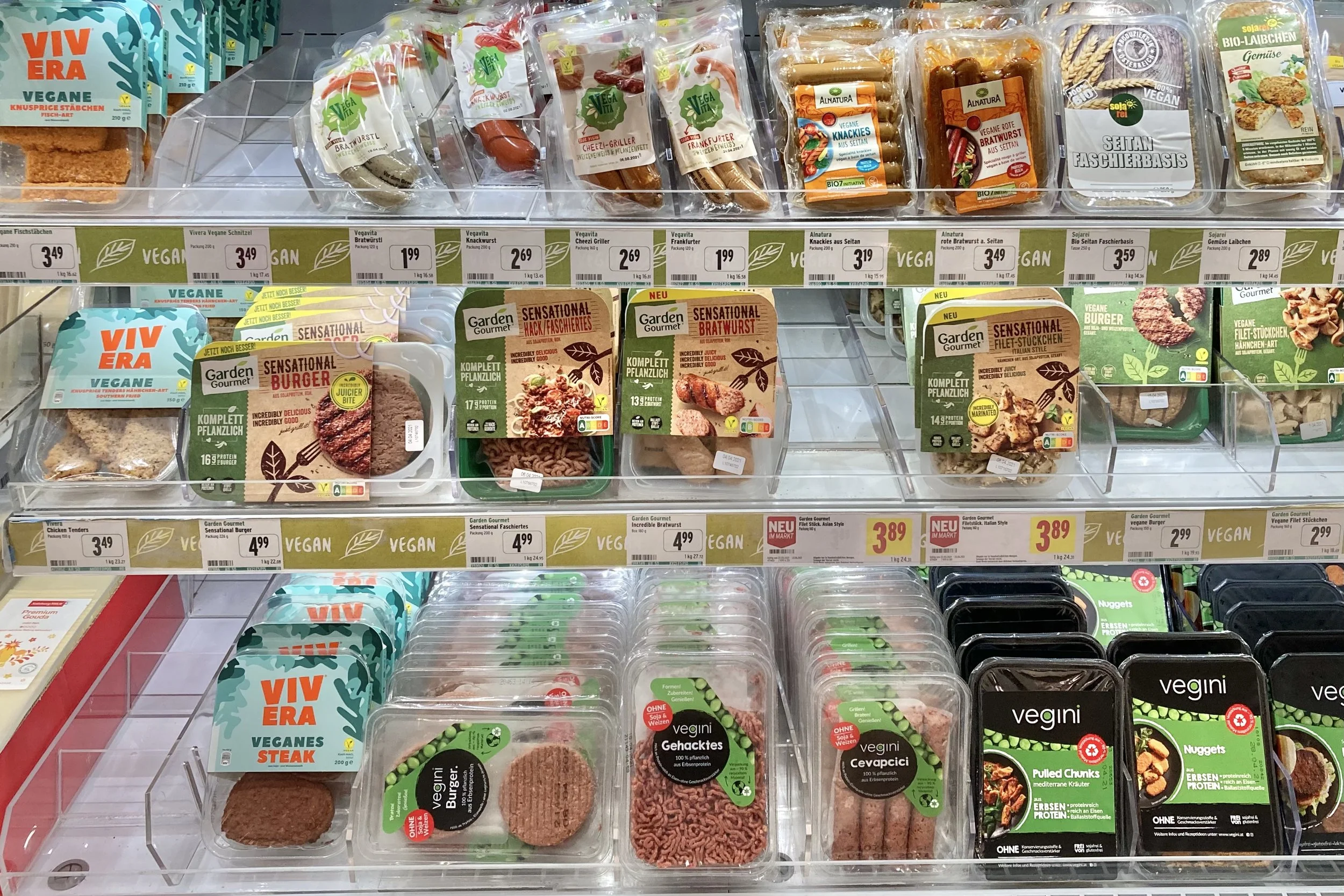
What is missing from the product-failure narrative is any accounting of what the alt-protein wave built that persists beyond its own commercial trajectory. The retail infrastructure, the consumer vocabulary, the normalization of substitution as a concept, the demonstrated willingness to pay — none of these assets appear in the decline narrative, because none of them appear on a balance sheet. They are, in the language of sustainability accounting, material but unmeasured.
The mechanism is psychological as much as commercial. Research on perceived behavioral plasticity confirms that people who can imagine changing a specific behavior are significantly more likely to support policies that facilitate it. The experience of trying a plant-based product — even imperfectly — raised millions of consumers' sense that eating less meat was achievable. That raised sense of feasibility is now the precondition for the policy environment Wave 2 will operate in. Wave 1 didn't just normalize the product. It normalized the possibility.(8)
II. Transitions Are Not Linear: What the Research Tells Us
Food system researchers have long understood that dietary transitions do not follow the adoption curves of consumer technology. A 2023 review in Appetite argued that behavior change around food is "typically slow, particularly for culturally ingrained and socially dependent behaviors," and that transitions require the creation of what the authors call "societal tipping points" — thresholds at which behavior shifts become self-reinforcing rather than individually effortful.³
The multi-level perspective on sustainability transitions, widely used in food systems research, describes how niche innovations must navigate socio-technical regimes before becoming mainstream. The critical insight from this literature is that niche-level commercial failure does not preclude regime-level change — in fact, failed niches frequently leave behind the institutional and cultural residue that enables later niches to succeed.⁴
A 2024 paper in Trends in Food Science and Technology identified eight distinct "transition design frames" through which plant-based protein transitions are being pursued simultaneously, noting that interventions at the cultural level — what they call "Cracking the Discourse" — can have spillover effects that persist long after the specific intervention has ended.⁵
This is precisely what we observe in the alt-protein case. The cultural spillover from Wave 1 is not visible in the sales data of Beyond Meat. It is visible in the menu decisions of restaurant operators in San Sebastián, Copenhagen, and Bangkok who are now designing plant-forward offerings — not because of sustainability conviction, but because of margin pressure, and because the cultural permission to do so now exists in a way it did not ten years ago.
WHAT WE MEAN BY CULTURAL INFRASTRUCTURE
Cultural infrastructure refers to the durable, non-physical assets created by a market intervention that persist beyond the intervention itself. In the case of alt-protein Wave 1, this includes: the normalization of protein substitution as a consumer concept; the establishment of dedicated retail category space and buyer relationships; the creation of a consumer vocabulary around alternative proteins (fermentation-derived, mycoprotein, precision fermentation); and the demonstration of willingness to pay a premium for animal-free protein options. None of these assets are owned by any individual company. All of them are available to Wave 2 entrants.
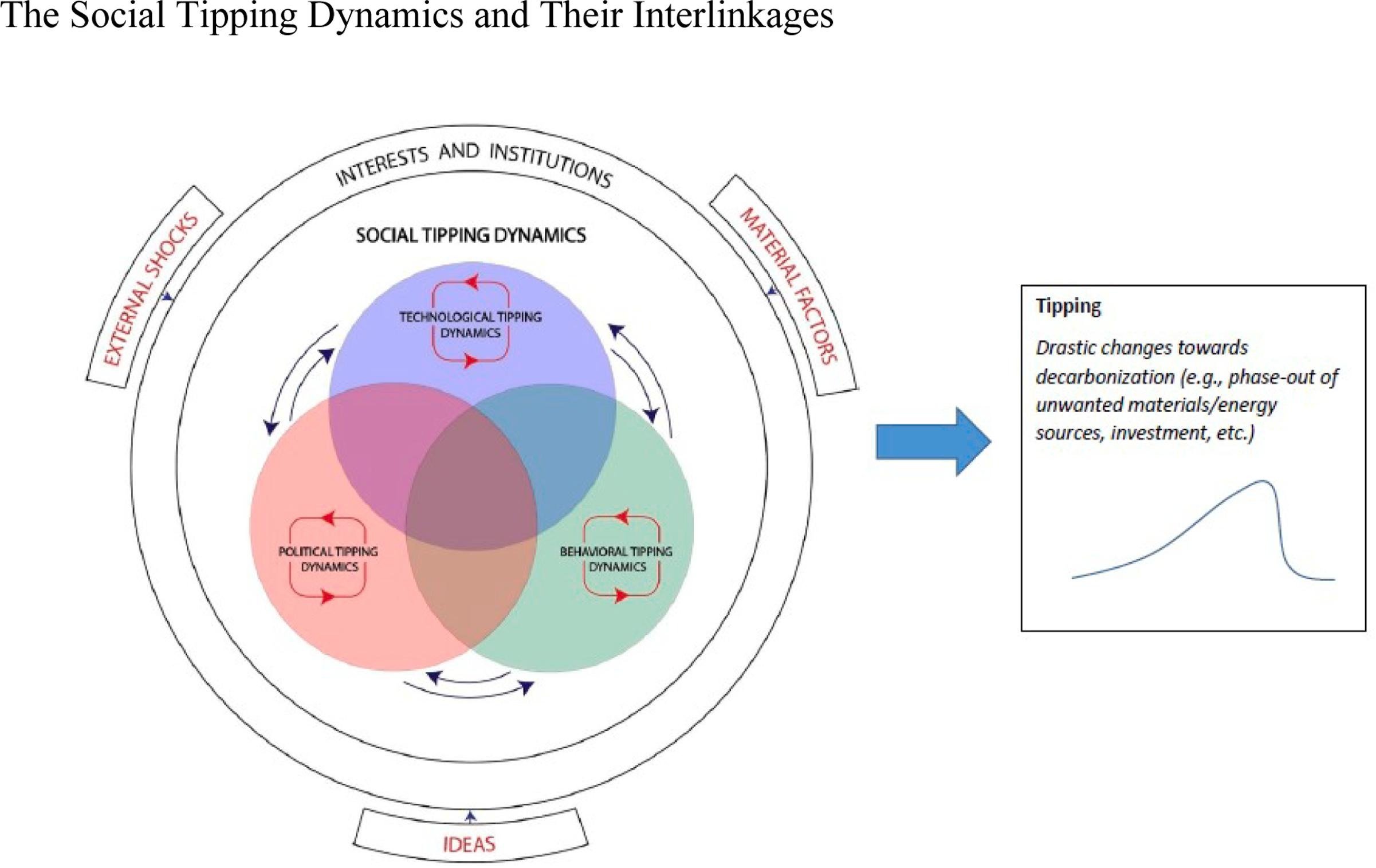
Stadelmann-Steffen, I., Eder, C., Harring, N., Spilker, G., & Katsanidou, A. (2021). A framework for social tipping in climate change mitigation: What we can learn about social tipping dynamics from the chlorofluorocarbons phase-out. Energy Research & Social Science, 82, 102307. https://doi.org/10.1016/j.erss.2021.102307
III. The Stepping Stone Theory: A Framework
Drawing on sustainability transitions theory and our practitioner intelligence, we propose the following framework for understanding plant-based adoption as a sequential, multi-wave process.
Wave 1: The Permission Wave (approximately 2015–2023)
Characterized by high capital intensity, brand-led marketing, and highly processed meat analogue products. The commercial logic was direct substitution: replace the burger with a plant-based burger that behaved identically. The cultural logic, whether intentional or not, was permission construction: demonstrating to mainstream consumers that protein substitution was possible, credible, and available.
On commercial terms, Wave 1 over-extended. On cultural terms, it succeeded. It normalized the ask. It built the shelf. It created the vocabulary. It moved the mental model.
The PNAS analysis of the alternative protein sector (2023) captured this dynamic: "This increasing legitimacy is occurring alongside a rising interest in veganism by high-end chefs as alternative proteins begin to attract attention in high-end food culture more widely."⁶ The legitimacy, not the product, is the output that matters.
Wave 2: The Craft Wave (approximately 2023–present)
Characterized by lower capital intensity, chef-led developments, ingredient-anchored innovation, and economic motivation rather than ideological positioning. The commercial logic is not substitution but redesign: building menus from the ingredient up, in which animal protein is one option rather than the default.
Crucially, Wave 2 is being driven by forces that have nothing to do with sustainability conviction. Rising meat and fish prices are making plant-forward menus the economically rational choice for hospitality operators across multiple markets. For the first time in this transition, environmental and economic incentives are pointing in the same direction.
This convergence is the structural shift that Wave 1 made possible but could not itself achieve. As Estefania Simon-Sasyk, founder of Mycelium Gastronomy Network, observed in a 2025 episode of the EIT Food Fight podcast: 'I do believe plant-based is going to be more and more dominant in our menus in restaurants all over. We're going to see more creative hybrids pop up everywhere — and I think it's affordability and economically motivated.'"⁷
Wave 3: The Invisible Wave (horizon)
The endpoint of the transition is not a thriving plant-based category. It is the disappearance of the category as a distinct entity — because the behavior has become unremarkable. Wave 3 is when "is this plant-based?" has no meaningful answer, because the menu was designed from the ingredient rather than from the substitution.
The goal of all transition work is to make itself unnecessary.
FOOD FOR THOUGHT
If the cultural infrastructure built by Wave 1 acts as a material enabling condition for companies entering Wave 2, how should it be integrated into sustainability strategy? Under double materiality frameworks — which assess both financial risks/opportunities and societal/environmental impacts — the consumer readiness, retail vocabulary, and willingness to pay generated by the alt-protein wave constitute a form of inherited social capital. While not captured on balance sheets, this market-level infrastructure should be explicitly incorporated into risk and opportunity assessments.
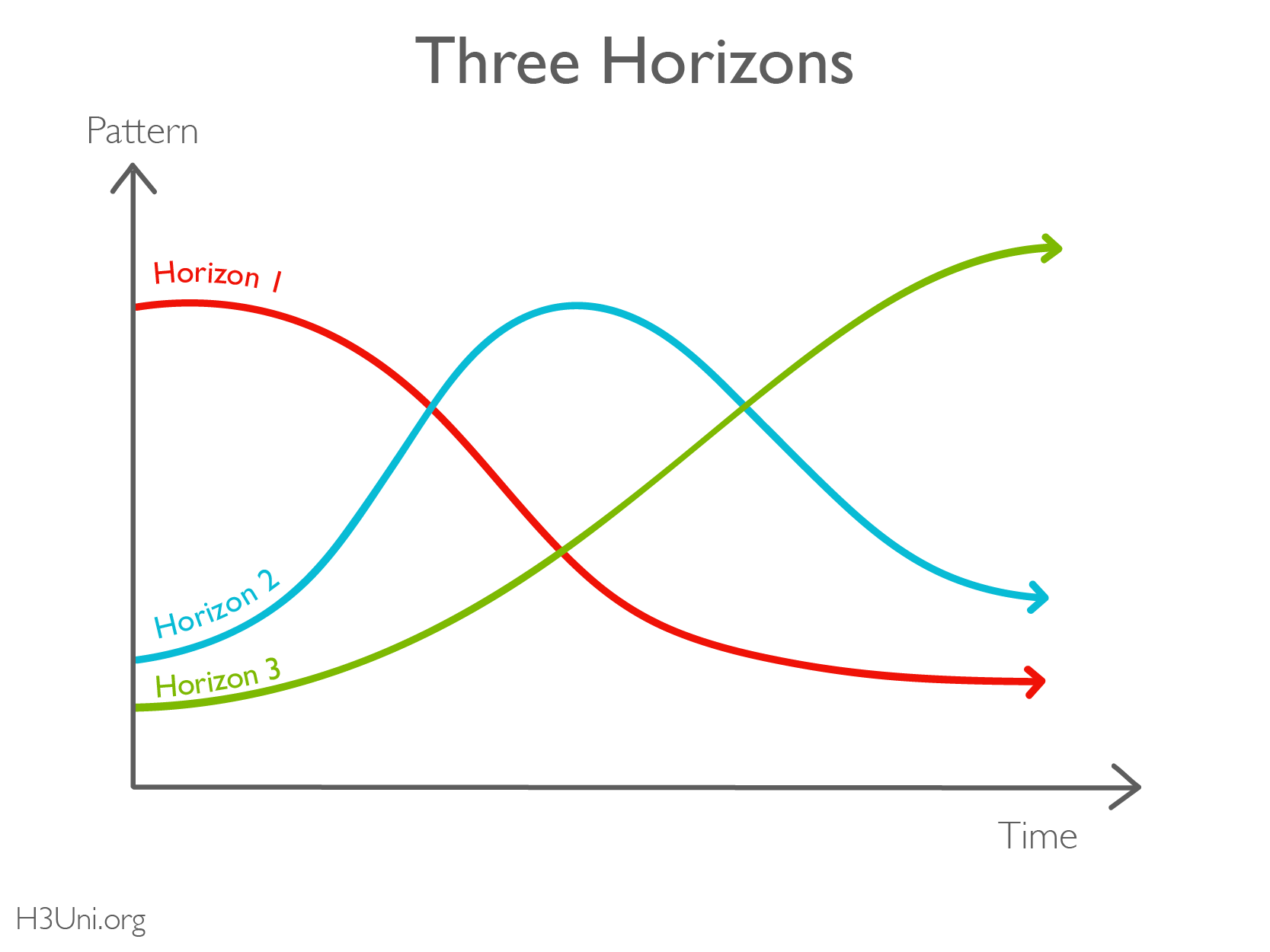
Three Horizons | Resource Library | H3UNI. (n.d.). H3Uni. https://www.h3uni.org/resource-library/tutorial/three-horizons
IV. What This Means for Organizations
Do not read the contraction as an exit signal.
The reduction of processed plant-based products from retail shelves is a signal that Wave 1 has ended — not that the transition has ended. The players who exit now will re-enter later at a higher cost, having missed the period in which Wave 2 infrastructure (culinary relationships, supply chain diversification, format innovation) is being built at relatively low cost.
Reframe sustainability as risk management, not communication.
The companies making the most durable investments in plant-forward strategy are not doing so only because of sustainability conviction. They are doing so because of supply chain risk, input cost volatility, and regulatory direction of travel. This is the correct frame, and it is the frame that unlocks boardroom alignment.
Our work with major food industry players illustrates this logic in practice: embedding gastronomic intelligence and practitioner knowledge into sustainability strategy not as a values layer, but as a sourcing resilience and innovation pipeline. The output is not a better sustainability report. It is a more defensible competitive position.
Invest in the cultural preconditions, not just the product.
The research is consistent on this point. The 2024 Trends in Food Science analysis found that cultural interventions in protein transition "can transcend specific behavioral situations, by affecting the complete set of consumer practices surrounding food and eating, with a potential spillover effect into other behavioral domains."⁵ Chef engagement, culinary education, and format innovation that fits existing kitchen practices are not marketing activities. They are the actual mechanism of adoption. Organizations that treat gastronomy as a strategic discipline — rather than a communications function — are the ones building durable Wave 2 positions.
Favour low-capital, infrastructure-compatible innovation.
One of the clearest signals from practitioners in our network, coming from Meez’s founder Bob Schultz, is the exhaustion with capital-intensive food innovation models. Alt-protein showed what happens when food innovation is structured like technology investment: the timescales are incompatible, the return expectations are unrealistic, and the narrative collapse when growth stalls is disproportionate to the actual failure of the underlying idea.
The products gaining traction in Wave 2 are designed to plug into existing infrastructure. They do not require new capex. They do not require fighting an ingredient's negative consumer history. They require culinary intelligence, practitioner relationships, and ingenuity.
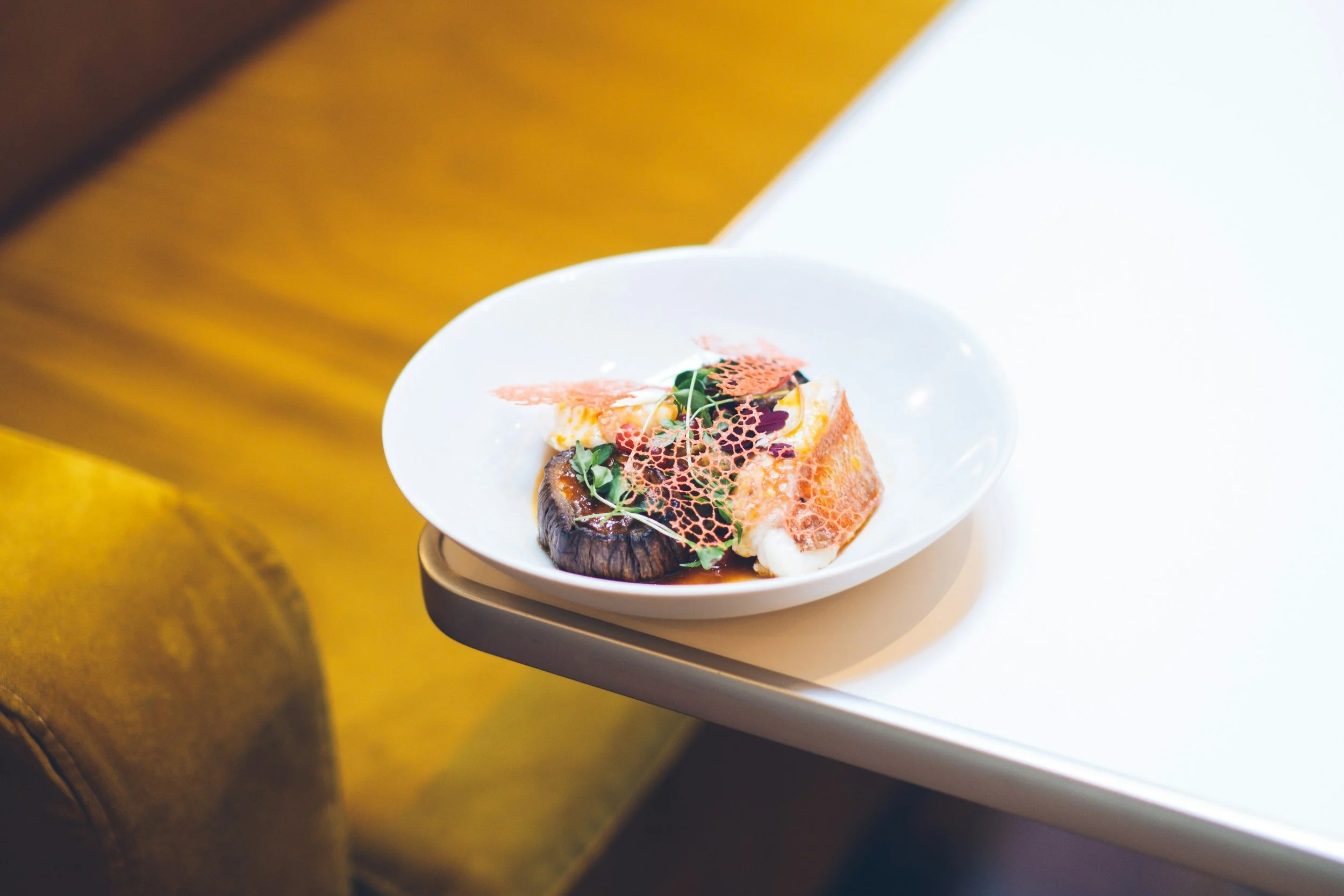
Foto de Timothé Durand en Unsplash
V. The Stepping Stone Theory: A Definition
Coined by Mycelium Gastronomy Network, 2025.
Transitions in food culture do not happen in single adoptive moves. They happen in a sequence of partial victories, where each wave normalizes the conditions for the next. The first wave creates the cultural permission. The second wave improves the product and the context. The third wave removes the category entirely — because the behavior has become unremarkable.
The commercial failure of any single wave is not evidence that the transition has failed. It is evidence that the stepping stone did its work. And the foot has moved.
Conclusion
The cultural work of the alt-protein decade is done. The strategic work of the craft decade is beginning. Economic and environmental incentives are converging around plant-forward food in a way that sustainability advocacy alone never achieved. The organizations that understand this convergence — and that can translate practitioner intelligence into financially material strategy — will be the ones that define the food landscape of the next decade.
At Mycelium Gastronomy Network, this is the work we do: connecting the gastronomic intelligence embedded in our global network of practitioners to the strategic decisions of food companies, procurement functions, and innovation teams. If you want to understand where your entry point is into this transition, we want to talk.
References
FAIRR Initiative. From Niche to Norm: The Decade of Alternative Proteins. October 2023. fairr.org
Brown, E. in conversation with FoodNavigator-USA. Beyond the Noise: Ethan Brown on Plant-Based Meat's Next Chapter. May 2025. foodnavigator-usa.com
Graça, J. et al. Transitions to plant-based diets: the role of societal tipping points. Appetite, 2023. sciencedirect.com
McGregor, A. Assembling the plant-based meat proposition: towards food systems transitions in Australia. 2025. centaur.reading.ac.uk
Hoogstraaten, L. et al. Framing for the protein transition: Eight pathways to foster plant-based diets through design. Trends in Food Science & Technology, 2024. sciencedirect.com
Lonkila, A. & Kaljonen, M. The big business of sustainable food production and consumption: Exploring the transition to alternative proteins. PNAS, 2023. pnas.org
Bergen, E. & Simon-Sasyk, E. in conversation with Eastland, M. Food Trends 2025: Regeneration, AI, and the Future of What We Eat. EIT Food Fight Podcast, February 2025. eitfood.eu
Nielsen et al. Perceived plasticity of climate-relevant behaviors and policy support. Global Environmental Change 96 (2026).