Sustainability Framework for UCAB
We designed a framework to weave in Sustainability in every course of LAGA
Client: Universidad Católica Andrés Bello (UCAB)
Sector: Higher Education
Service: Education
Location: Caracas, Venezuela · Year: 2022
Result: A sustainability framework co-developed through South-to-South knowledge exchange became the organising logic of LAGA's entire curriculum — governing teacher onboarding, programme design, and school positioning. Four years on, incoming students cite Venezuelan gastronomic identity as their primary reason for choosing the school, and two Venezuelan universities have launched programmes with comparable local-focus positioning.
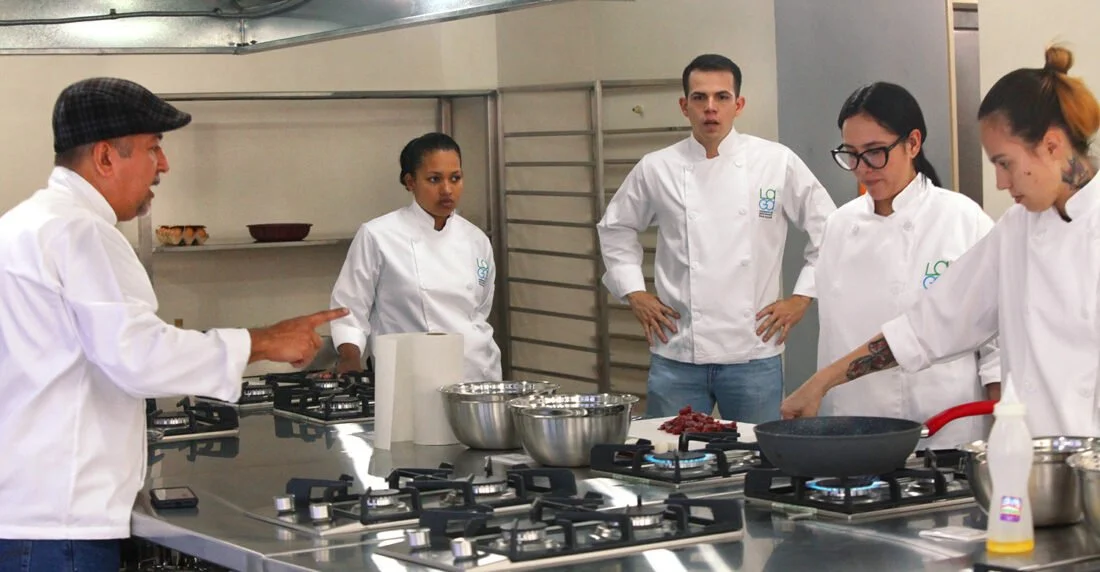
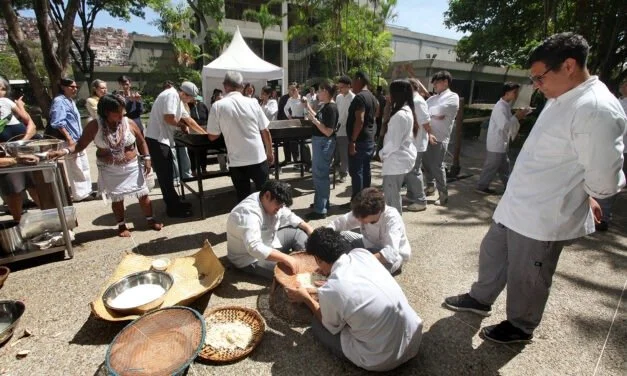
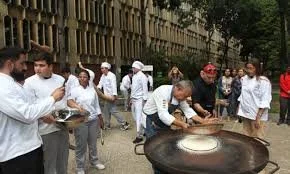
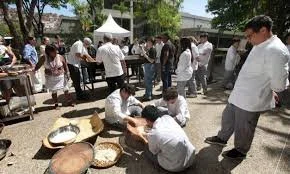
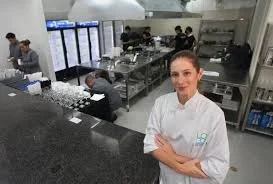

The Universidad Católica Andrés Bello is launching Gastronomy Academy, LAGA. For the Academy, Mycelium developed a sustainability frameworkthat, together with business management, is one of the main pillars of the program.
To ensure applicability, the project leveraged South-to-South knowledge transfer (Thailand-Venezuela), in two phases:
Consultancy on guidelines and topics to be incorporated into the Gastronomy Certification curriculum on sustainability.
An online course on Sustainability for the HORECA sector.
The Challenge
How might we define a sustainability framework coherent with the global principles and sustainability goals, which is at the same time applicable for the HORECA sector in Venezuela?
How we tackled it
Alignment
Our strategy centered on learnings and practices around sustainability from South to South, defining a team that included specialists from Venezuela and Thailand to be coherent with the complexity and characteristics of the Global South.
Methodology
South-to-South knowledge transfer Thailand-Venezuela
Research
For this phase, the team:
Explored the sustainability concept, the global frameworks, and Venezuelan studies on sustainability.
Created a matrix of current HORECA projects focused on sustainability, and reached out to understand their practices, procedures, and viability.
Analyzed the syllabus proposed by UCAB for the Gastronomy Certification and characterized the subjects into theoretical and practical to define specific topics or actions for each.
Development
Taking into consideration the previous research we:
Defined a 5 pillar framework for sustainability in the HORECA sector.
Reviewed each subject of the Gastronomy Certificate to include the transversal concept of sustainability in terms of good practices and complementary theory.
Created an online course for sustainability in the HORECA businesses.
Led an open webinar with guests from businesses all around the world to share their experiences and understand how the 5 pillars are put into practice in multiple ways.
Deliverables
For the consultancy phase
5 pillar framework for sustainability
Review and feedback with exercises and references for each subject of the Gastronomy Certificate
For the Sustainability in HORECA online module
An 8 hours module on what is sustainability and how to define good sustainable practices for a HORECA business
A live webinar with guests from ongoing HORECA projects with a special focus on sustainable practices with +150 attendants globally
Meet the Team Involved
Estefania Simon-Sasyk
Constanza Díaz del Castillo Velásquez
Dharath Hoonchamlong
“The work with Mycelium has helped us dimension in our context sustainability as the axis of our education program, thanks to a multidisciplinary team of experts who have applied parallels with other geographically distant contexts similar to Venezuela. As a result of this work, we were able to develop a differentiated and innovative programmatic proposal whose objective is to train agents of change for our country.
For us, having worked with Mycelium has been essential and very enriching.”
“My competitive advantage is not only that I know how to cook — I can tell the story behind each Venezuelan ingredient.”
“The recipe is not the final objective but the means for understanding a technical process with global impact. The student stops being a simple executor and becomes a resource manager”